Make your health last: 10 tips for men over 40.

Your 40s mark a turning point for your health. Testosterone begins to decline, muscle mass starts to decrease, and cardiovascular risks rise, but the right habits can help you stay ahead of it all. Here are 10 expert-backed tips you can take to support your health and keep your body feeling its best.
10 ways to protect your health.
1) Don’t skip your annual physical with your primary care provider.
Did you know 44% of men don’t get their yearly physical? (1) It may seem easy to skip out on if you feel healthy overall, but annual physicals can save your time, money, and health in the long run.
The medical tests and lifestyle screening questions conducted at a physical can detect early symptoms that may indicate a more serious health condition. Regular visits also help your doctor spot changes over time that might need follow-up. If you don’t have a primary care provider, Rightway can help you find the right one for you.
2) Get important screenings beyond your physicals.
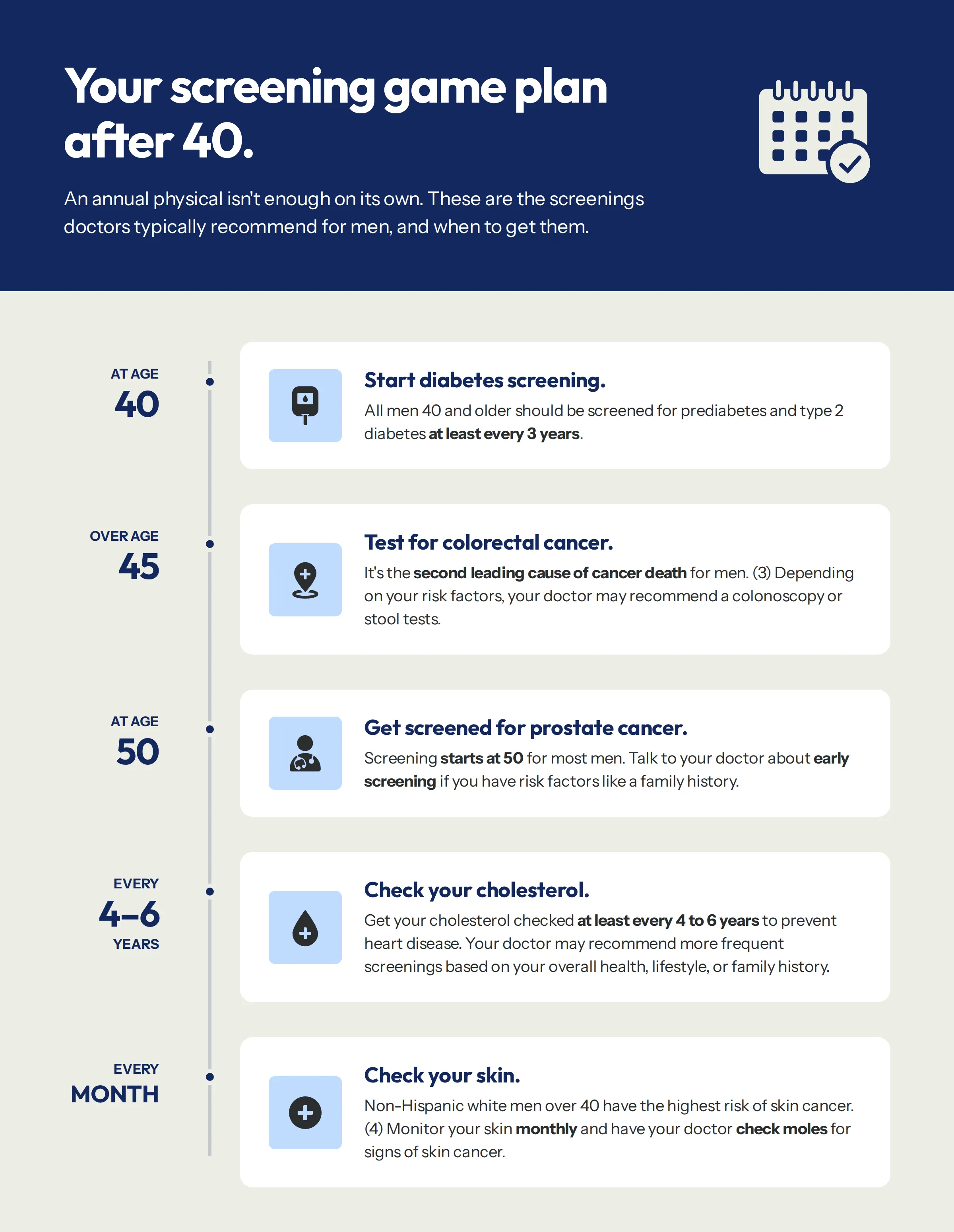
You need more than an annual physical to protect your health. Screenings are an important part of preventive care that can help you avoid serious health complications.
Doctors typically recommend a few specific screenings for men. Some of these can be done at your annual physical, like checking your blood pressure, while others require additional appointments and testing. (2)
3) Understand how testosterone changes with age.
Starting at age 40, your testosterone drops about 1-2% every year, and these hormonal changes impact more than you may think. (5) Symptoms of decreased testosterone can include:
- Low energy and stamina
- Weight gain
- Difficulty sleeping or night sweats
- Mood swings, irritability, depression, or anxiety
- Brain fog
These changes are often gradual and can be easily mistaken for natural changes that come with age, when they may actually stem from treatable hormonal conditions. The best way to check your testosterone levels is through blood tests. Talk to your doctor about testing and treatments that may be right for you. (5)
4) Exercise regularly to preserve muscle and bone.
Exercise can slow or even reverse the decline in muscle mass that begins in your 40s. (6) Practice resistance exercises like squats, bicep curls, lunges, or push-ups to strengthen your muscles, support your bone density, and boost your metabolism. Experts recommend doing muscle-strengthening activities like these at least twice a week.
Cardio is also crucial to reducing your risk of heart disease, stroke, diabetes, and cognitive decline. Aim for 150 minutes per week, or about 22 minutes a day, of exercises like cycling, swimming, or jogging. (6)
5) Monitor your alcohol intake.
Drinking alcohol in any quantity carries health risks, and those risks increase the more you drink. In general, men are more likely to drink alcohol and report heavy drinking, while they’re also 3 times more likely to die of an alcohol-related cause. (7)
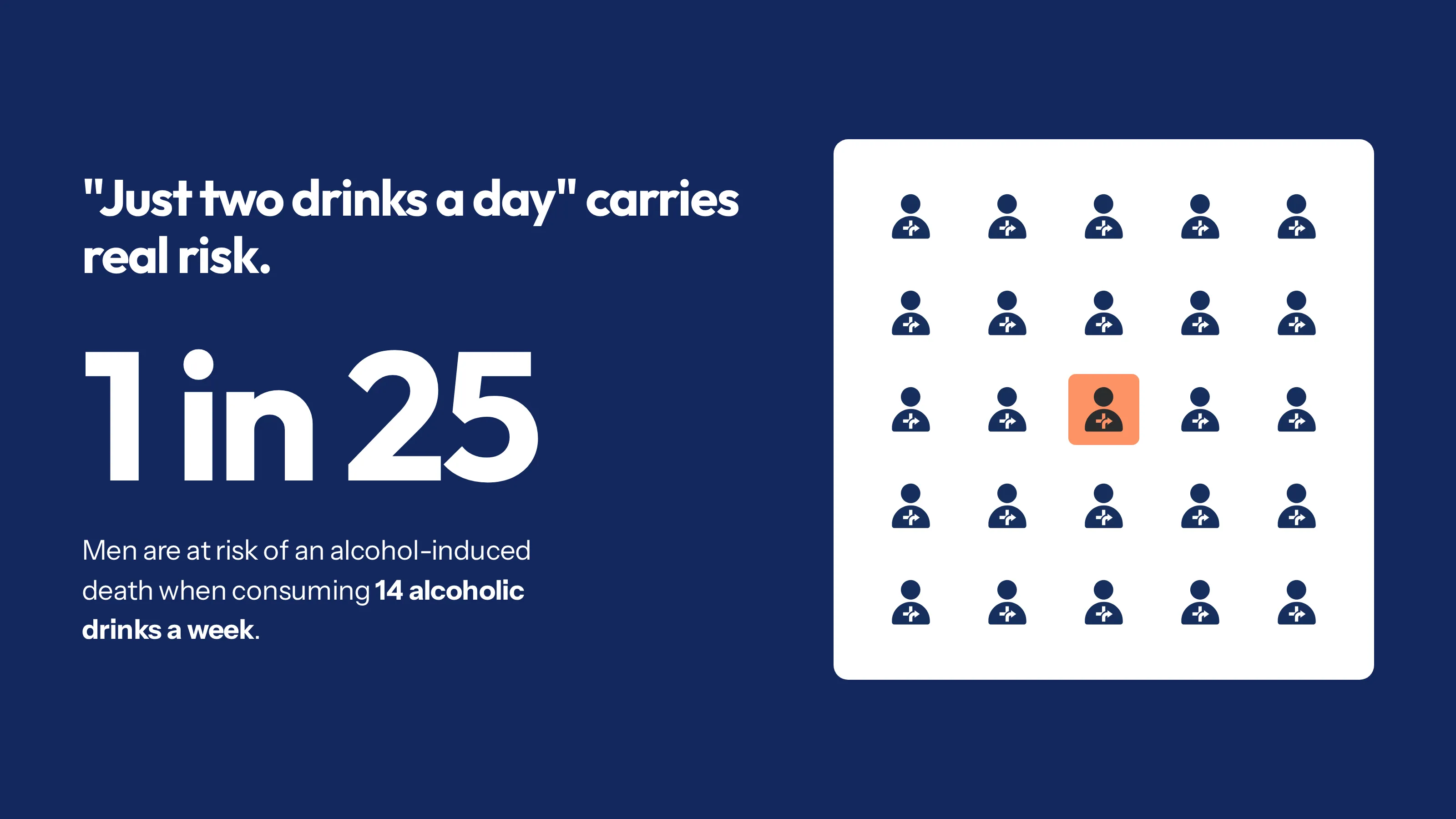
New research shows that for men consuming only 2 drinks a day, or 14 a week, the risk of alcohol-induced death is 1 in every 25. (8) Monitoring your intake, or even quitting, can increase your longevity and prevent health complications like cancer, liver disease, and heart disease.
6) Protect your sleep and recovery.
Getting 7-9 hours of sleep each night allows your body to rest, reset, and heal. However, on average, men are more likely to skimp on sleep, with nearly 40% getting less than the recommended amount. (10)
It’s important to remember that sleep is essential for your long-term wellness, helping you maintain a healthy immune system, improve heart and metabolic health, reduce stress, and strengthen your attention and memory for better performance each day.
To improve your sleep hygiene, try having a consistent sleep schedule, avoiding large meals and alcohol at night, and turning off your phone and TV at least 30 minutes before bed. (11)
7) Prioritize the right nutrients.
In your 40s and beyond, your muscle mass begins to decline, and your metabolism slows. But maintaining a healthy diet, reducing processed foods, and focusing on specific nutrients can work against these age-related losses and keep your body feeling its best. Here are some important nutrients for most men. (6)
| Nutrient. | What you need to know. |
|---|---|
| Protein | Studies show adults over 40 benefit from more protein. Aim for ~0.5 grams per pound of body weight (87.5 grams for a 175-pound man). |
| Magnesium | Supports bone, muscle, and testosterone health. Aim for ~420 milligrams a day. |
| Omega-3s | Help protect your heart and brain as you age. Aim for ~1.6 grams per day. |
| Calcium | Important for bone health. Aim for at least 1,000 milligrams a day. (9) |
| Fiber | Helps manage weight, blood pressure, cholesterol, and blood sugar, which is even more important as you age. Aim for ~31 grams of fiber per day. |
Exact nutrient needs vary based on your body, lifestyle, and health goals. Talk to your doctor about what might be right for you and how to find the best diet for your health.
8) Manage stress and mental health.
Unmanaged stress can lead to many physical and mental health complications, including inflammation, immune system damage, and heart disease. Being able to manage your stress and get support when you need it is essential for your long-term health.
Mental health is a serious concern for men, and suicide continues to be a leading cause of death, particularly for men over 65. (12) If you're struggling, you're not alone, and support is available.
There are many stress management techniques you can try to protect your well-being. But if you’re feeling consistently stressed, overwhelmed, anxious, or depressed, seek support from a mental health professional.
9) Quit smoking.
Men over 40 report some of the highest rates of smoking, while simultaneously being more likely to develop lung cancer and other forms of cancer, partially driven by tobacco usage. (13) Quitting is one of the best things you can do for your long-term health. If you’re having trouble quitting or want support, talk to your doctor. They can help you find the right tools.
10) Prioritize social connections.
Did you know one study found that social isolation in adults increased their risk of premature death by the same amount as smoking 15 cigarettes a day? (14) Social connection can support healthy aging by reducing depression and anxiety and improving cognitive function.
To support your long-term health, find ways to stay connected with others, whether by spending time with friends and family, joining community groups, or volunteering.
Rightway is here to make it easier and more affordable to take control of your health. Reach out to us if you have questions or need support.
Download the Rightway app and connect with a healthcare expert today.
Get startedSources:
- Cleveland Clinic. (2023). Cleveland Clinic survey examines the current state of men’s health in America.
- Medline Plus. (2025). Health screenings for men ages 40 to 64.
- American Cancer Society. (2026). Key statistics for colorectal cancer.
- National Cancer Institute. (2022). Cancer stat facts: Melanoma of the skin.
- Columbia University Irving Medical Center. (2025). How testosterone changes affect men’s health as you age.
- Stanford Medicine. (2026). Five healthy habits for longevity in your 40s and 50s.
- National Center for Drug Abuse Statistics. (2025). Alcohol abuse statistics.
- George, S., Naimi, T., et al. (2026). Alcohol intake and health study: No protective effect at low levels, with mortality increasing to 1 in 25 at 14 drinks per week.
- Dietary Guidelines for Americans 2020-2025. (2019). Nutritional goals for each age/sex group.
- Centers for Disease Control. (2024). FastStats: Sleep in adults.
- Centers for Disease Control. (2024). About sleep.
- Illinois Department of Public Health. (2023). Men’s mental health facts and statistics.
- Office of the Surgeon General (US). (2024). Eliminating tobacco-related disease and death: Addressing disparities: A report of the Surgeon General.
- Wang, F., et al. (2023). A systematic review and meta-analysis of 90 cohort studies of social isolation, loneliness and mortality. Nature Human Behavior.

Make your health last: 10 tips for men in their 20s and 30s
Read more Make your health last: 10 tips for men in their 20s and 30s
Do you really need supplements? What a dietitian wants you to know.
Read more Do you really need supplements? What a dietitian wants you to know.
The weight loss playbook your doctor wishes you knew.
Read more The weight loss playbook your doctor wishes you knew.
Staying grounded at work: 7 ways to manage stress in the AI era
Read more Staying grounded at work: 7 ways to manage stress in the AI era
Make your health last: 10 tips for women over 40
Read more Make your health last: 10 tips for women over 40

The member experience with Rightway care navigation.
Read more The member experience with Rightway care navigation.
Disputing a medical bill with Rightway care navigation.
Read more Disputing a medical bill with Rightway care navigation.
Finding a doctor with Rightway care navigation.
Read more Finding a doctor with Rightway care navigation.
Health guide support with Rightway care navigation.
Read more Health guide support with Rightway care navigation.
Accessing specialty medications with Rightway PBM.
Read more Accessing specialty medications with Rightway PBM.


Unlock expert health tips
Subscribe to our member newsletter.