The internet has a lot to say about sunscreen. Here's what the science says.

One scroll through social media is all it takes to find conflicting advice about sunscreen. Some posts call it a daily essential, while others claim it’s unnecessary. So how do you know what's backed by science and what's simply trending?
The truth is that sunscreen is one of the simplest and most effective ways to protect your skin, reduce your risk of skin cancer, and prevent premature aging. (1) But choosing the right sunscreen and using it correctly turns a simple step in your routine into an important part of preventive care. Plus, with the FDA’s recent approval of its first new sunscreen ingredient in more than 20 years, there are even more options for sun protection.
This summer, leave sunscreen myths behind and discover what's new in sun protection. Here’s what you need to know about the FDA approval and the truth behind the myths.
Myth #1. “Sunscreen in the US isn’t as safe as in other countries.”
While the European Union (EU), Australia, parts of Asia, and Latin America have more approved sunscreen filters (or the active ingredient that makes sunscreen work) than the US, that doesn’t mean our sunscreen isn’t safe. (2)
In many other countries, sunscreen is classified as a cosmetic, while the US classifies it as an over-the-counter (OTC) drug. That means the FDA has to thoroughly test and approve new active ingredients before they can be added to US sunscreens. This can take decades, but it does verify their safety thoroughly before an ingredient can enter the US market, which brings us to the FDA’s most recent approval. (2)
Bemotrizinol is a new, highly safe and effective chemical filter that was approved in June 2026. This filter has been approved in the EU since 2000 and is now entering the US sunscreen market as the first chemical filter to be designated as Generally Recognized as Safe and Effective (GRASE), meaning it has well-established scientific evidence backing its quality. (2)

Myth #2. “Mineral sunscreens are always better.”
Sunscreen filters fall into two categories: mineral and chemical. Mineral sunscreens, made with zinc oxide or titanium dioxide, sit on the skin's surface and protect against UV rays. Chemical sunscreens absorb UV energy before it can damage the skin. (3)
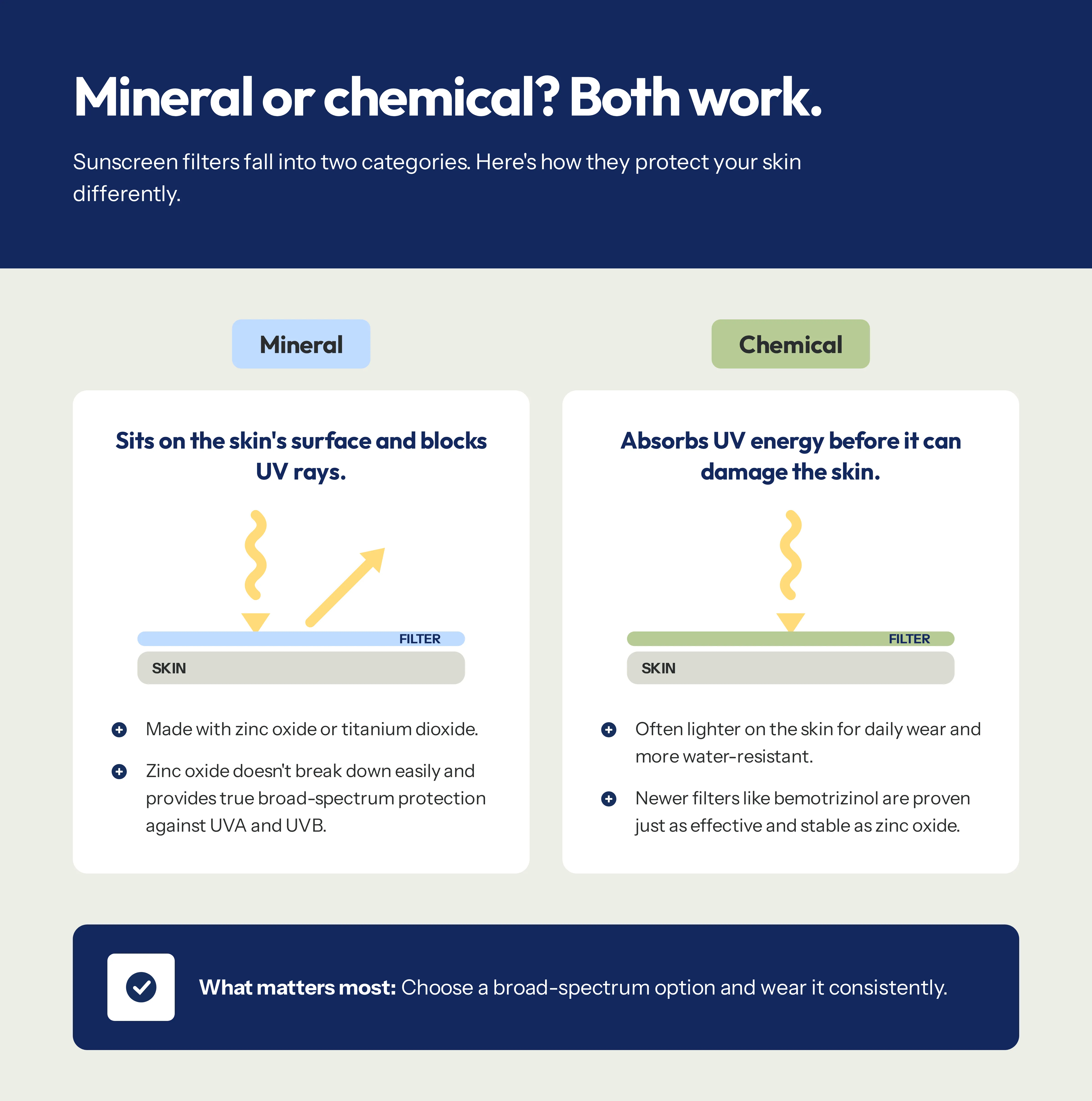
For years, zinc oxide was the closest thing to a universal recommendation, since it doesn't break down easily and provides true broad-spectrum protection, meaning it effectively blocks both UVA and UVB radiation. (3) However, chemical sunscreens offer their own unique benefits.
They’re often lighter on the skin, leave less of a white cast, making them more compatible with deeper skin tones, and newer filters are getting better at broad-spectrum protection. (4) Bemotrizinol has been proven to be just as effective and stable as zinc oxide, making it a great option for chemical sunscreens. (2)
Whether you choose a mineral or chemical sunscreen containing newer filters like bemotrizinol, the most important thing is to choose a broad-spectrum, water-resistant option and wear it consistently.
Myth #3. “The sun is natural. I don’t need to protect my skin from it.”
This is one of the most common objections to sunscreen use, but science is clear: repeated UV exposure damages your skin, even when you don't immediately notice it. (5)
The sun’s rays consist of ultraviolet A (UVA) and ultraviolet B (UVB) radiation. UVA penetrates the skin deeply, causing wrinkles, fine lines, and age spots that start far below the surface. UVB mostly harms the outermost layers of your skin, causing sunburns. This UV exposure is damaging to all skin tones and types, even if you can’t see the effects right away.
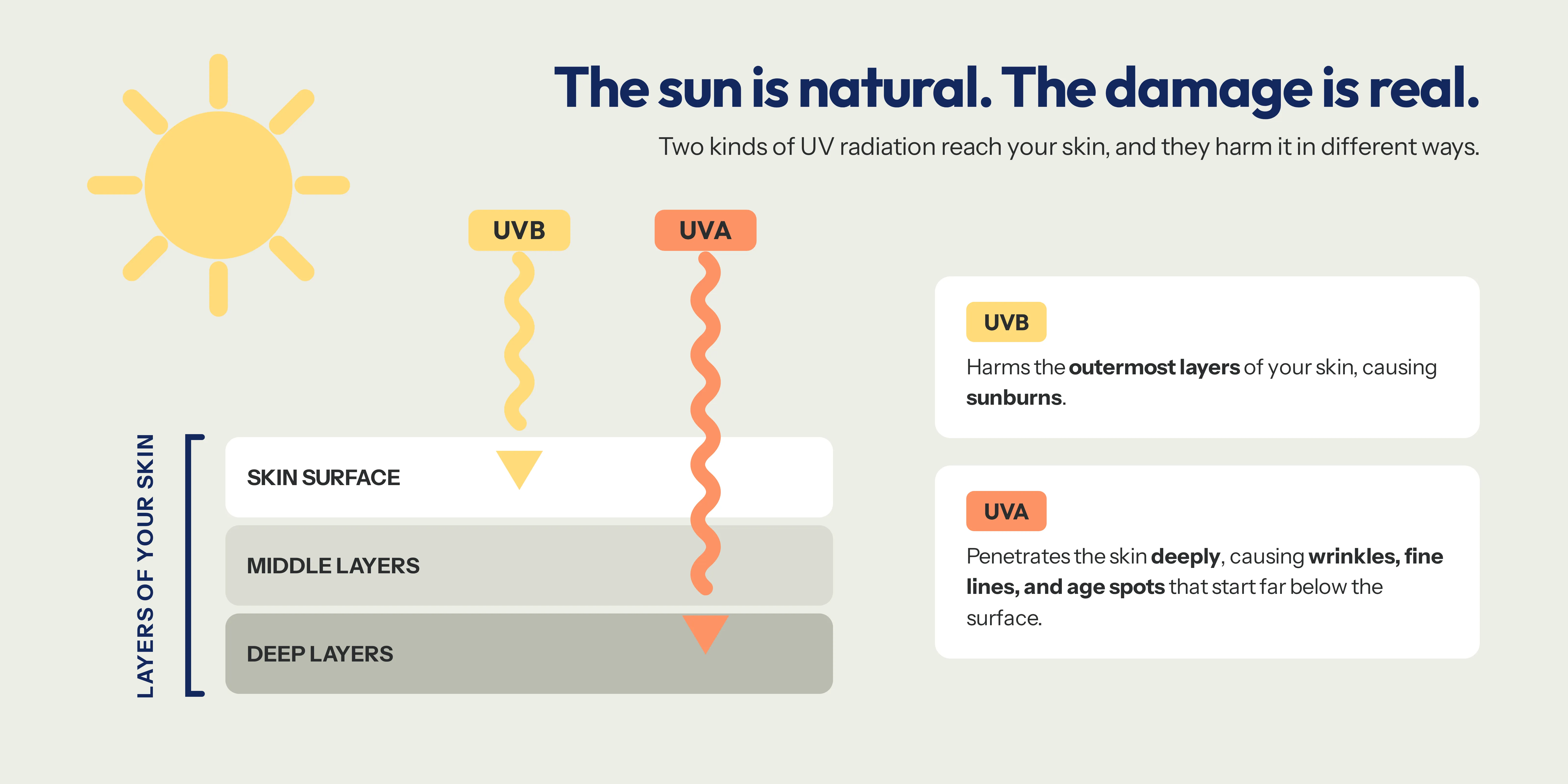
Your body works hard to repair this damage (like through skin peeling after a sunburn). But it builds up over time, causing genetic damage that can lead to cancer. (6) That’s why even one sunburn can increase your risk for cancer, while research suggests that consistent sunscreen use can reduce your skin cancer risk by roughly 50%. (7) (8)
Myth #4. “Applying a higher SPF will last me all day.”
SPF 100 doesn’t equal all-day protection. SPF simply measures how well a sunscreen protects against UVB rays.
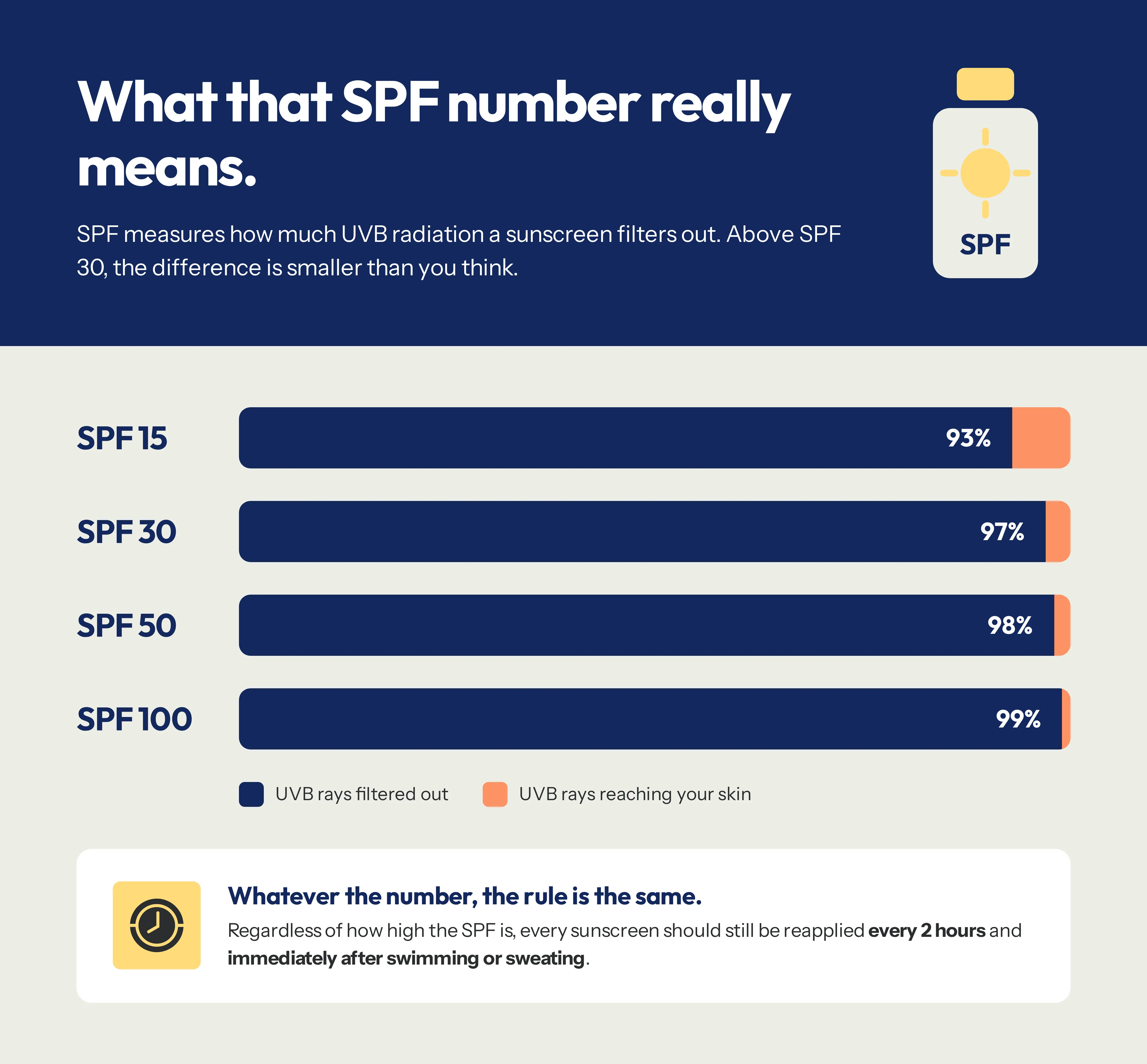
Dermatologists typically say any sunscreen SPF 30 or above will have you covered. But whether you choose SPF 30 or SPF 100, sunscreen should still be reapplied every two hours and immediately after swimming or sweating. (4)
Remember, you also have to apply enough sunscreen to get the protection the bottle claims. To put it in perspective, you should use at least an ounce of sunscreen, or enough to fill a shot glass, to cover your whole body. That also means that SPF in makeup typically isn’t enough to keep your skin safe. (3)
Myth #5. “I only need to wear sunscreen when I’m at the beach.”
Though sunscreen is even more important on long days in the sun, sunscreen is a daily essential—even on cloudy or rainy days. Up to 80% of UV rays can pass through clouds and reach the skin, and UVA rays are long enough to penetrate window glass, reaching your skin through the office or car window. (1)
That means any day can bring the risk of skin damage, no matter the weather, the season, or your plans. Building sunscreen into your everyday routine and applying it correctly is what actually keeps your skin protected.
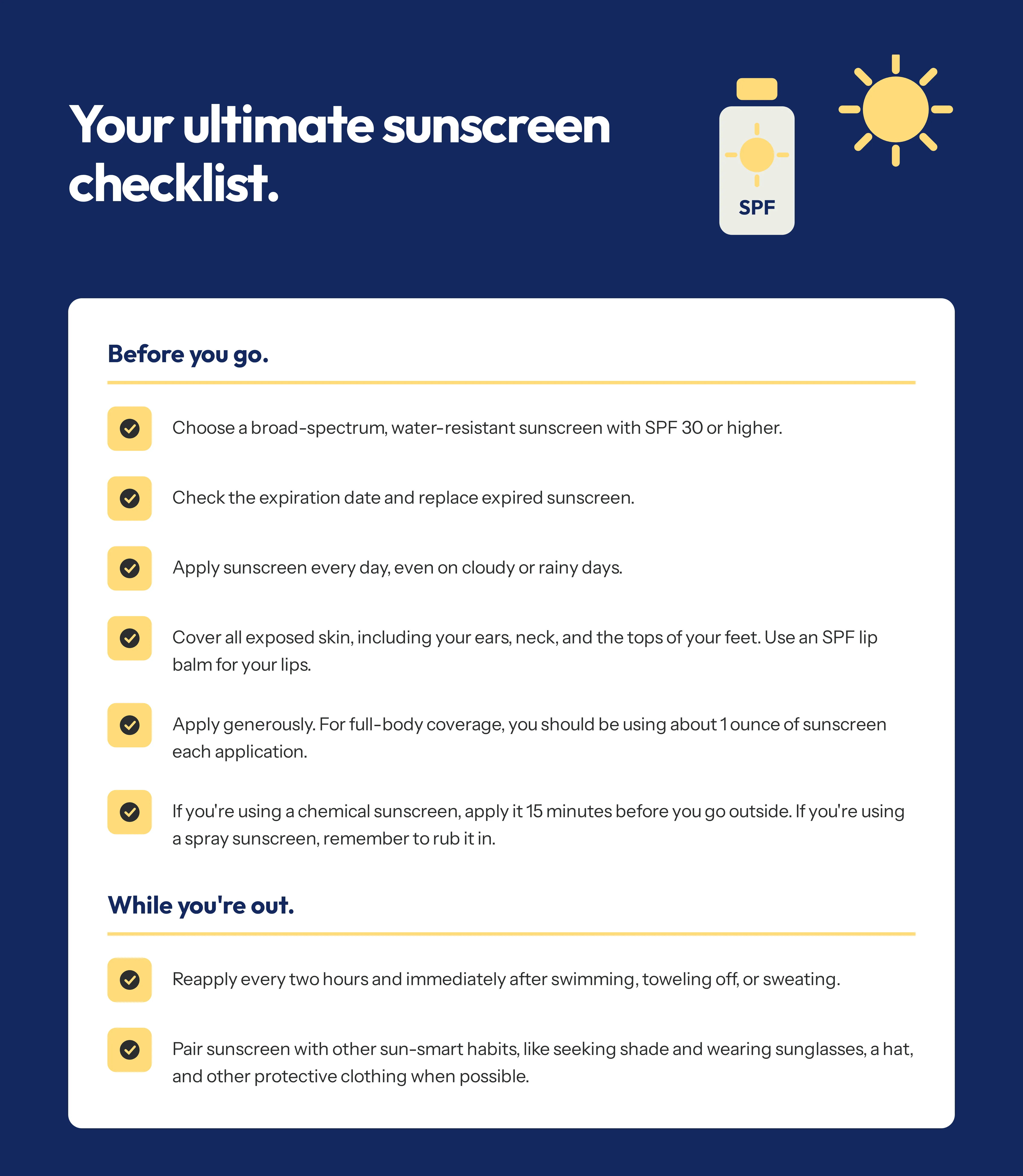
Your summer sunscreen checklist.
Before heading outside, remember these simple habits to keep your skin happy and healthy.
The bottom line.
Wearing sunscreen is one of the easiest ways you can protect your health for years to come. The best sunscreen is the one you'll realistically use every day, applied generously and reapplied often. That consistency matters more than any single ingredient or SPF number.
Though social media can be a great place to discover new products and skincare routines, remember that not every viral health claim is backed by science. Rightway is always available to help you separate fact from fiction.
Have more questions? Rightway is here to help. Reach out to us to get connected with providers, learn about skin cancer screenings, and dermatology resources available through your health plan.
Download the Rightway app and connect with a healthcare expert today.
Get startedSources:
- American Medical Association. (2025). What doctors wish patients knew about wearing sunscreen.
- American Journal of Managed Care. (2026). 5 questions dermatology patients may have about newly-approved bemotrizinol.
- Sabzevari, N., Qiblawai, S., Norton, S., et al. (2021). Sunscreens: UV filters to protect us: Part 1: Changing regulations and choices for optimal sun protection. International Journal of Women’s Dermatology.
- Stanford Medicine. (2025). Sunscreen fact and fiction. What the science says.
- Sultana, S., Naz, S., Akhtar, N., et al. (2024). From rays to protection: How sun exposure affects our skin and the importance of sunscreen. Recent updates in disease and health research, vol. 9.
- National Institutes of Health. (2014). Sun and skin.
- Calderon Alonso, A.I., Lim, H.W. & Tsao, H. (2026) Sunscreen and skin cancer prevention: photobiology, clinical evidence, and emerging controversies. Archive of Dermatological Research.
- Veterans Affairs. (2025). Sunburns fade, damage is forever.


The member experience with Rightway care navigation.
Read more The member experience with Rightway care navigation.

Disputing a medical bill with Rightway care navigation.
Read more Disputing a medical bill with Rightway care navigation.
Finding a doctor with Rightway care navigation.
Read more Finding a doctor with Rightway care navigation.
Health guide support with Rightway care navigation.
Read more Health guide support with Rightway care navigation.
Accessing specialty medications with Rightway PBM.
Read more Accessing specialty medications with Rightway PBM.

Unlock expert health tips
Subscribe to our member newsletter.