Your gut health questions, answered.

If you've ever Googled a digestive symptom at 11pm and found yourself going down a rabbit hole, you’re not alone. Bloating, IBS, acid reflux, and food intolerances are some of the most common health concerns out there, but they’re also some of the most misunderstood.
So, we asked our members what questions they have about gut health and pulled together research-backed answers you can trust.
"What is gluten, and is it actually bad for you?"
Gluten is a protein that’s naturally found in wheat and other grains. But, while other proteins are easily broken down by our body’s digestive system, gluten is harder, and a little bit of undigested gluten is always left over.
For most people, this doesn’t cause any problems, but for others, this can cause a range of symptoms from bloating and skin rashes to a serious autoimmune reaction. Gluten is not inherently bad for you, and gluten-containing whole grains are full of essential nutrients. (1) In general, the only people who should consider a gluten-free diet are people with: (2)

“Why does everything I eat and drink cause bloating?”
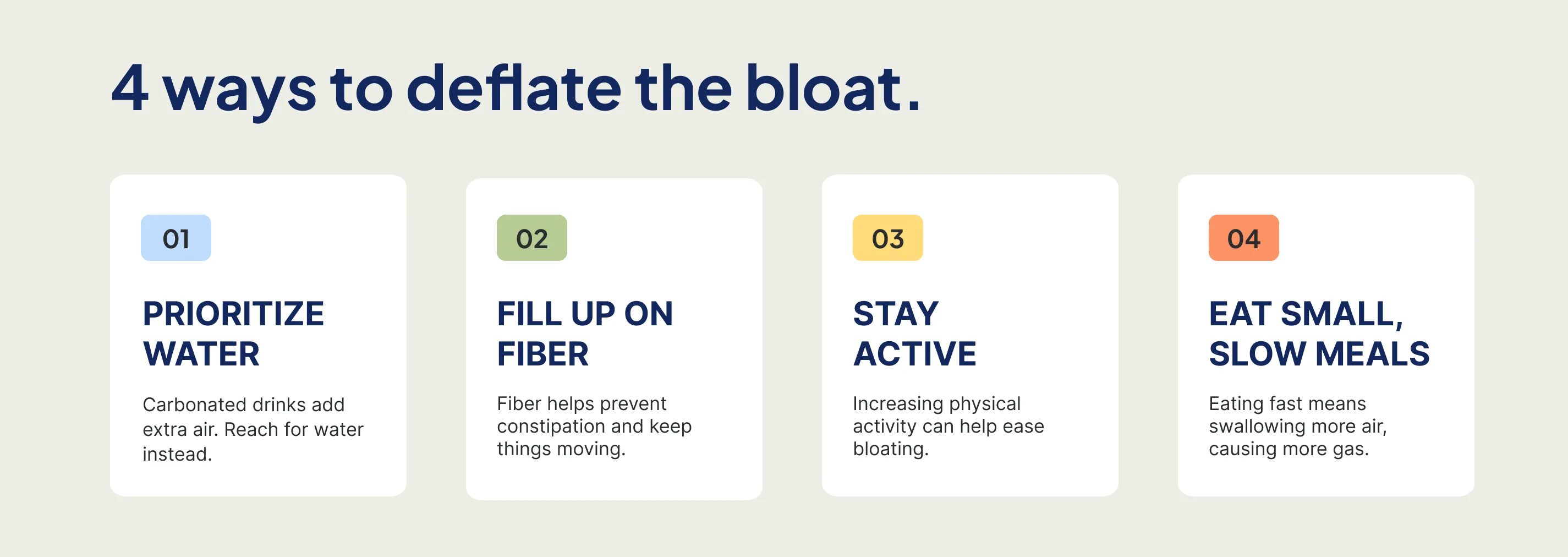
As you’re eating or drinking, you also swallow air that creates gas in your stomach. Gas is a natural part of digestion, but too much can cause bloating. Gas can also be created in your intestines by food that hasn’t been digested yet, which is why bloating can worsen with constipation.
Frequent bloating doesn’t necessarily mean you have a condition like small intestinal bacterial overgrowth (SIBO) or functional digestive disorders, though it can be an indicator. First, try incorporating some of these lifestyle changes that can help with bloating:
But if you’re bloated for more than a week or experiencing symptoms like pain, unexplained weight loss, fever, vomiting, or bleeding, reach out to a healthcare provider. (3)
“Does my gut health affect my brain health?”
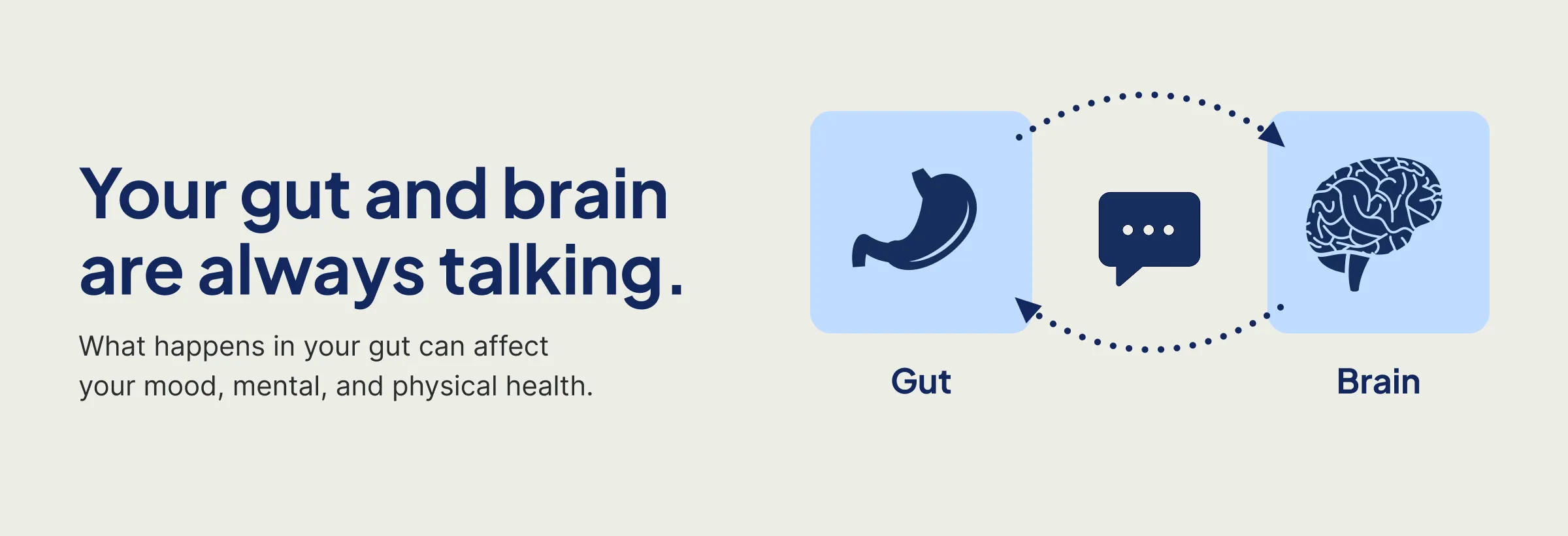
More and more research shows a strong connection between the gut and the brain. In fact, our digestive system is in constant communication with the brain, which can have vast effects on mental and physical health. (4)
Most scientists agree that this connection largely comes from the gut microbiome. Good bacteria are shown to reduce feelings of anxiety and depression, and there’s emerging research that gut inflammation and other gastrointestinal symptoms may play a role in conditions like mood disorders. (5)
The impact of the gut can also go beyond mental health, with growing research into the role of the gut-brain connection on diseases like Alzheimer’s, Parkinson’s, and even immune disorders. As research grows, scientists are developing new treatments for these conditions that focus on gut health.
“I’ve had a lot of digestive issues after starting a GLP-1. What can I do?”
GLP-1s slow gastric emptying, meaning food stays in your stomach for longer so you feel full. This is one of the reasons why GLP-1s are so effective for weight loss; however, it can throw off your digestive system. (6)
There are some general recommendations to support your digestion on GLP-1s, like eating small meals slowly, drinking plenty of water, and ensuring your diet is healthy and balanced with foods that are easy to digest (like bananas, grains, and cooked vegetables). (7)
If you’re experiencing side effects from GLP-1s, Rightway can help. Our experts can provide clinical support to answer questions and help manage symptoms.

“Does menopause affect gut health?”
When estrogen and progesterone drop during menopause, studies show that the transition can lower the diversity of your gut microbiome, which means fewer good bacteria to support healthy digestion. The change may also impact your gut barrier, weakening it and allowing bad bacteria to leak through.
However, this relationship has also been shown to work both ways: your hormone levels can impact your gut health, but your gut health can also impact your hormone levels. Balancing your gut may help with hormone regulation and menopause symptoms. (8)
“What are the best tests to detect gut issues or food sensitivities?”
Generally, the most trusted diagnostic test is an endoscopy and biopsy, so doctors can find microscopic changes in your gut lining, signs of inflammation, or abnormal growth. (9) For many gastrointestinal disorders, including inflammatory bowel disease (IBD) and gastroesophageal reflux disease (GERD), tests typically involve stool samples or blood tests that are sent to a lab for analysis.
For food sensitivities, doctors typically recommend a double-blind oral food challenge. This test takes a few hours in specialized medical offices where doctors can observe your reactions to potential allergens. (10) If you’re interested in gut health tests, a Rightway health guide can help you find in-network providers and schedule your appointment.
When it comes to gut issues, go straight to the experts. For more information on gut health and digestive concerns like GERD, colon cancer, and SIBO, you can hear from board-certified gastroenterologist Dr. Harold Schwarz and Rightway’s Dr. Ted Feldman in our member webinar: Get your gut together.

Have more questions? Reach out to Rightway.
Our experts can provide personalized guidance, and our health guides can connect you with in-network specialists like gastroenterologists and dietitians.
Download the Rightway app to connect with a healthcare expert.
Get startedSources:
- Johns Hopkins Medicine. (2026). What is gluten and what does it do?
- Mayo Clinic. (2024). Gluten-free diet.
- Cleveland Clinic. (2026). Bloated stomach.
- Stanford Medicine. (2025). The gut-brain connection: What the science says.
- Petrut, S., Bragaru, A., et. al. (2025). Gut over mind: Exploring the powerful gut-brain axis. Nutrients.
- Peters, B.A., Santoro, N., Kaplan, R.C., and Qi, Q. (2022). Spotlight on the Gut Microbiome in Menopause: Current Insights. International Journal on Womens Health.
- Stanford Medicine. (2026). GLP-1s 101: What the science says about weight loss, side effects, safety.
- Gorgojo-Martínez, J.J., et. al. (2022). Clinical Recommendations to Manage Gastrointestinal Adverse Events in Patients Treated with Glp-1 Receptor Agonists: A Multidisciplinary Expert Consensus. Journal of Clinical Medicine.
- Agbor, T.A., Khan, W.I. (2025). Recent Trend of Laboratory Tests in Common Gastrointestinal Tract Disorders. Diagnostics (Basel).
- Onyimba, F., Crowe, S., Johnson, S., Leung, J. (2021). Food Allergies and Intolerances: A Clinical Approach to the Diagnosis and Management of Adverse Reactions to Food. Clinical Gastroenterology and Hepatology.


The member experience with Rightway care navigation.
Read more The member experience with Rightway care navigation.

Disputing a medical bill with Rightway care navigation.
Read more Disputing a medical bill with Rightway care navigation.
Finding a doctor with Rightway care navigation.
Read more Finding a doctor with Rightway care navigation.
Health guide support with Rightway care navigation.
Read more Health guide support with Rightway care navigation.
Accessing specialty medications with Rightway PBM.
Read more Accessing specialty medications with Rightway PBM.