No gym? No problem. 5 easy ways to stay active.
It’s no secret that regular exercise is one of the most important ways to support your long-term health. Experts recommend that adults get at least 150 minutes of moderate-intensity physical activity or 75 minutes of high-intensity activity every week, along with muscle-strengthening activities at least 2 days a week. (1)
That might sound like a lot, but you don’t have to do long sessions at the gym to hit your exercise goals. You can break up your activity throughout the week, find ways to move more throughout the day, and build a routine that works for your lifestyle. And you don't need expensive equipment or a gym membership to get started.
Why is exercise so important?
Regular exercise improves almost every aspect of your health, from your heart and muscles to your brain and mental well-being.
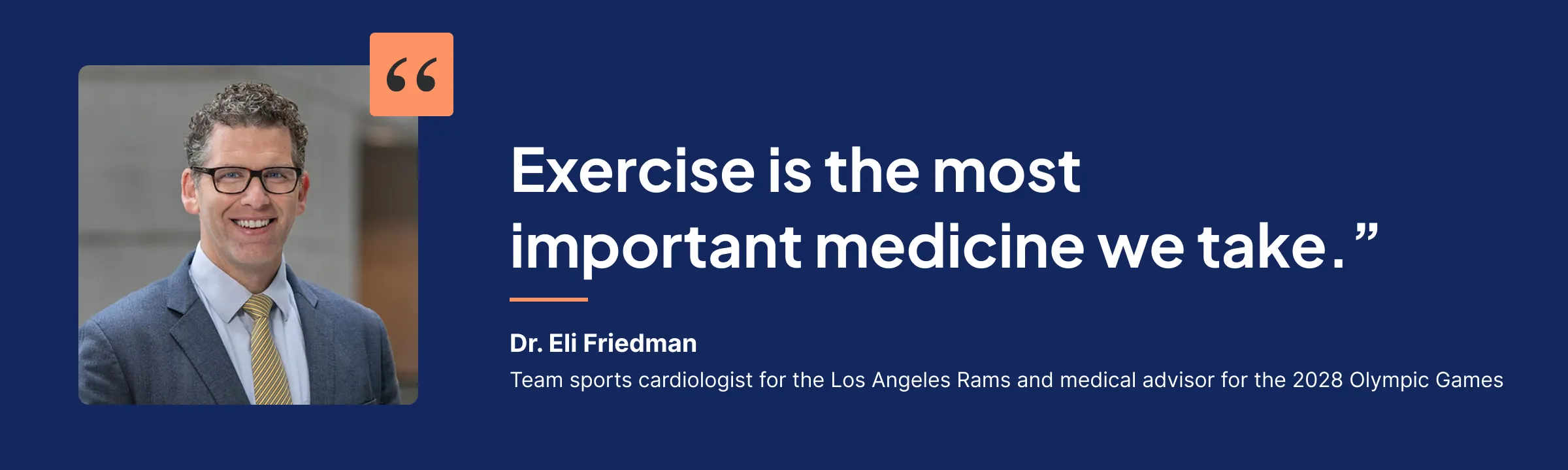
Dr. Eli Friedman, sports cardiologist for the LA Rams and a medical advisor for the 2028 Olympic Games, says, “Exercise is the most important medicine we take. People who do it live longer and better than those who don’t, irrespective of all those things like risk factors and family history.”
And it’s true. Studies show that exercise supports your memory and learning, boosts mood and mental health, improves sleep, metabolism, and immune function, strengthens muscle function, and reduces your risk of heart disease, stroke, diabetes, dementia, and many cancers. (2) (3)
But if you're new to exercise, the most important thing is simply getting started. As Dr. Friedman explains, finding movement that's accessible, sustainable, and enjoyable can help you build habits that last.
Here are 5 ways to incorporate movement into your life, all without a gym membership.
The best health benefits come from consistent exercise with a balance of cardio and strength training. (4) But there’s no one-size-fits-all routine you need to do to reach your goals. Here are 5 easy and low-effort ways to get started on your fitness journey, all that you can start today with no equipment or gym.
1) Try the “Japanese Walking Method.”
You might have seen the “Japanese walking” trend online. It involves slow walking for 3 minutes, then fast walking for 3 minutes, and rinse-and-repeat for 30 minutes. Japanese researchers were the first to prove the effectiveness of this method, but really, it’s just a form of interval training.
Interval training is a special kind of exercise that’s quick and accessible while producing substantial health gains. By alternating between periods of higher and lower intensity, you challenge your cardiovascular system while giving your body time to recover. That helps your heart and lungs get stronger and better at consuming oxygen, and interval walking has been proven to increase leg and joint strength and overall physical fitness. (5)
This method is a simple way to add variety to walks and gradually challenge yourself. If you want to try it, just start at a pace that feels comfortable and adjust the intensity to match your fitness level.
2) Have an “exercise snack.”
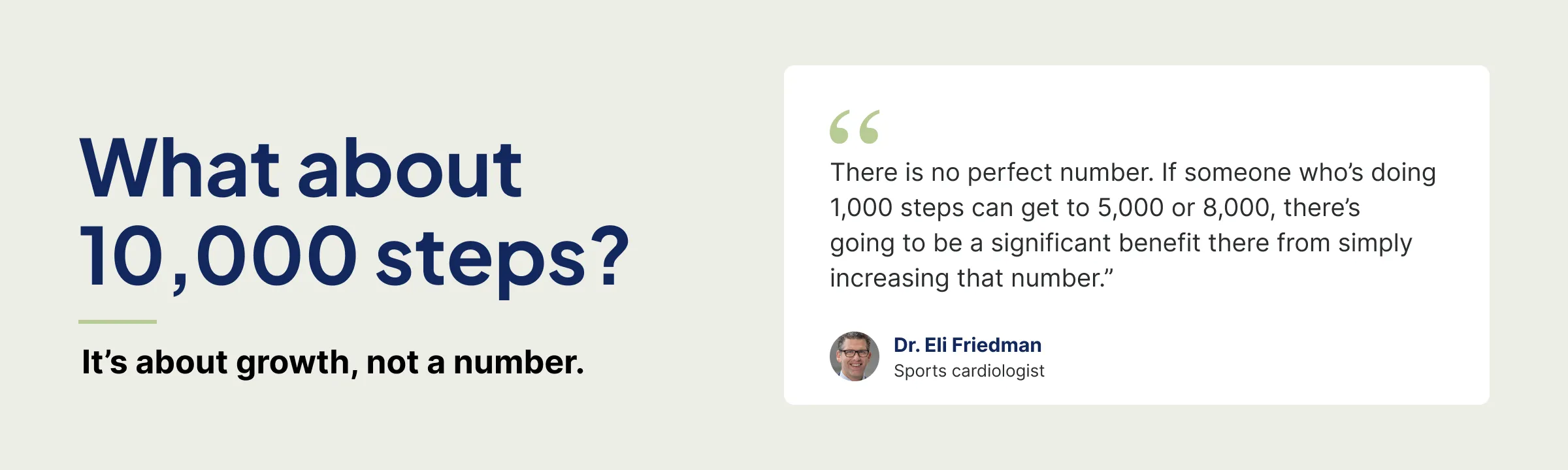
You don't have to squeeze all your physical activity into one long workout. Short bursts of movement throughout the day can add up, too, even if it’s just 5-10 minutes. Dr. Friedman calls these “exercise snacks”: little tidbits of activity that help you move more and break up long periods of sitting.
For example, if you’re sitting at a desk all day at work, get up and take a quick walk around your office or go up and down the stairs. If you have to go grocery shopping, try parking your car in one of the farthest spots to get some steps in.
Even a few minutes of movement is a great place to start. And if you find yourself with more time, you can always keep going.
3) Use exercise videos.
You don't need a personal trainer or expensive gym membership to get a guided workout. Free exercise videos can help you find routines that match your interests, fitness level, and schedule.
There are many options out there for exercise videos, like dance workouts to some of your favorite songs, or at-home strength training videos that use your body weight instead of equipment. Or, if you’re looking for something slower and more relaxing, try yoga videos.
Not sure where to start? Try a different type of workout or instructor each week to see what you like and find something you genuinely enjoy. Remember, the more fun it is, the easier it will be to make movement part of your routine.
4) Turn chores into exercise.
Did you know that tasks like cleaning, gardening, or mowing the lawn can count toward your exercise goals? Each of these activities includes intentional movement of the body, whether that’s through aerobic activities (like walking around your house while vacuuming) or some resistance exercises (like digging in a garden).
If you want to get more out of your routines, try picking up the pace while cleaning, spending extra time working in the garden, or adding a few bodyweight exercises, like calf raises while washing the dishes.
5) Add some weight.
Take those chores a step further by adding wearable weights. Whether it’s a weighted vest, ankle weights, or wrist weights, wearing weights turns your everyday activities into challenging exercises. You can wear light weights while running errands, walking around, or cooking to build muscle without adding another item to your to-do list. If you’re new to strength training, just remember to start small, and as you get stronger, you can get heavier weights to keep challenging yourself.
Building an exercise routine that works for you.
The best exercise routine looks different for everyone. If you’re new to exercise, or struggling to consistently meet your fitness goals, here are some general tips to remember in order to get the most out of your exercise routine.
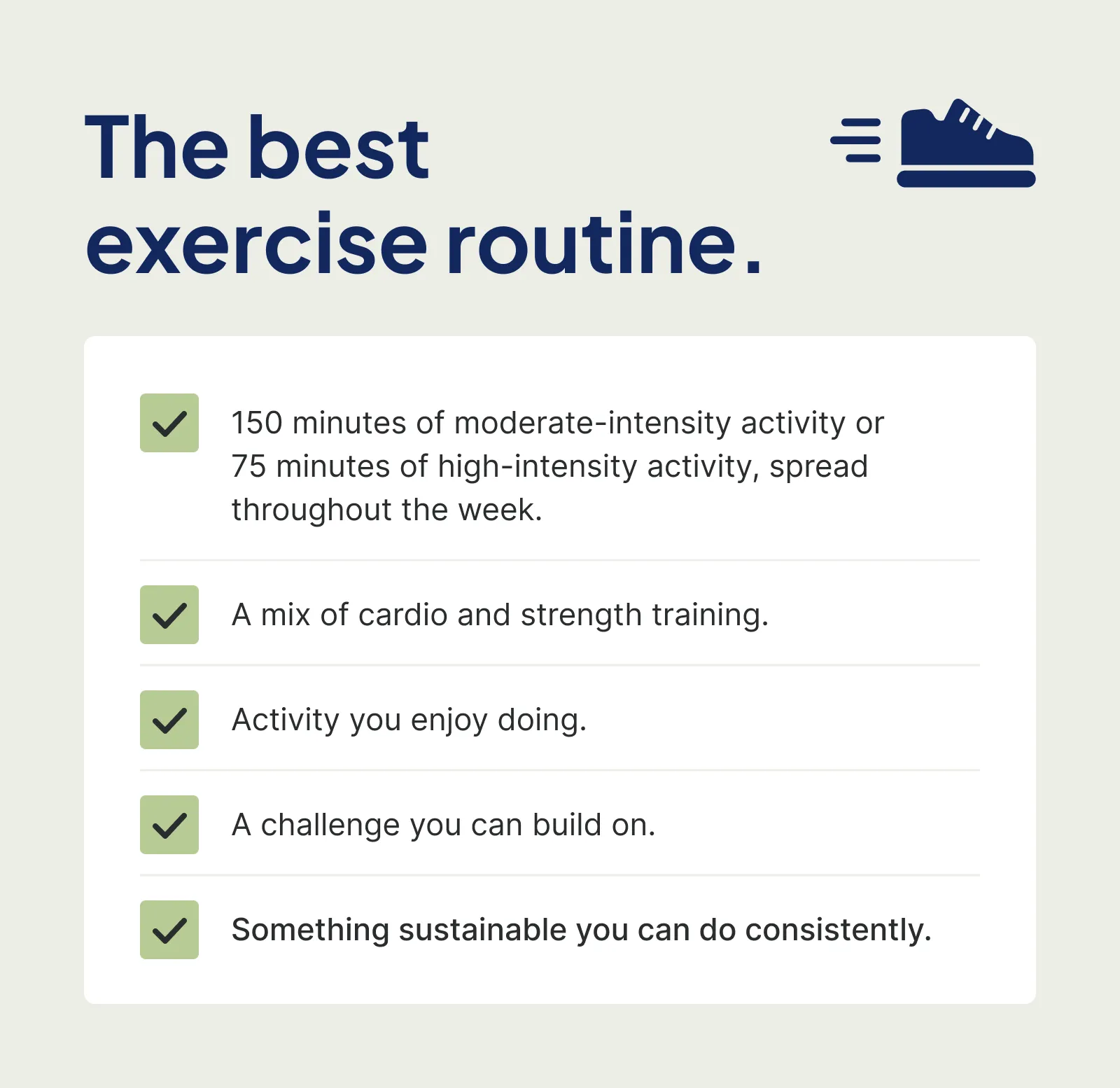
Every body is different. Consult with your healthcare provider to determine what’s right for you.
Everyone has different fitness levels, health conditions, and body compositions that impact the exercise routines that work for you. Remember, these guidelines are general recommendations that can be adjusted based on what’s right for you and your body.
If you have chronic conditions that make it more difficult to exercise, or take certain medications that can affect your heart rate or ability to exercise, talk to your healthcare provider about the healthiest way to incorporate movement into your life.
Your Rightway team can also help answer questions about your condition or medications to make sure you can exercise safely.
As Dr. Friedman said, the bottom line is simple: “Start somewhere. Build on that, and just keep taking that drug of exercise that we hope people get addicted to.”
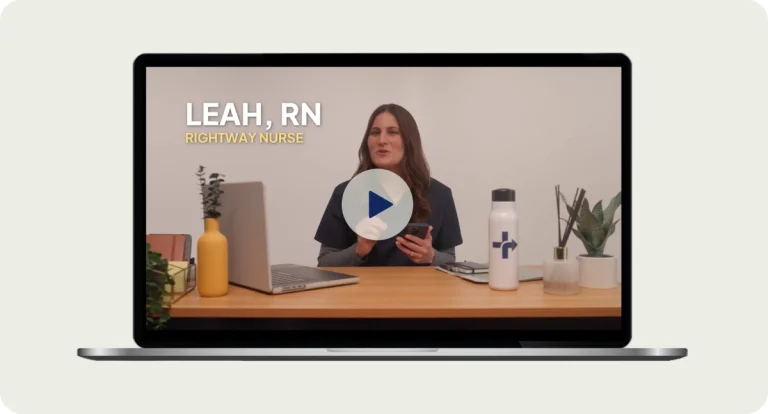
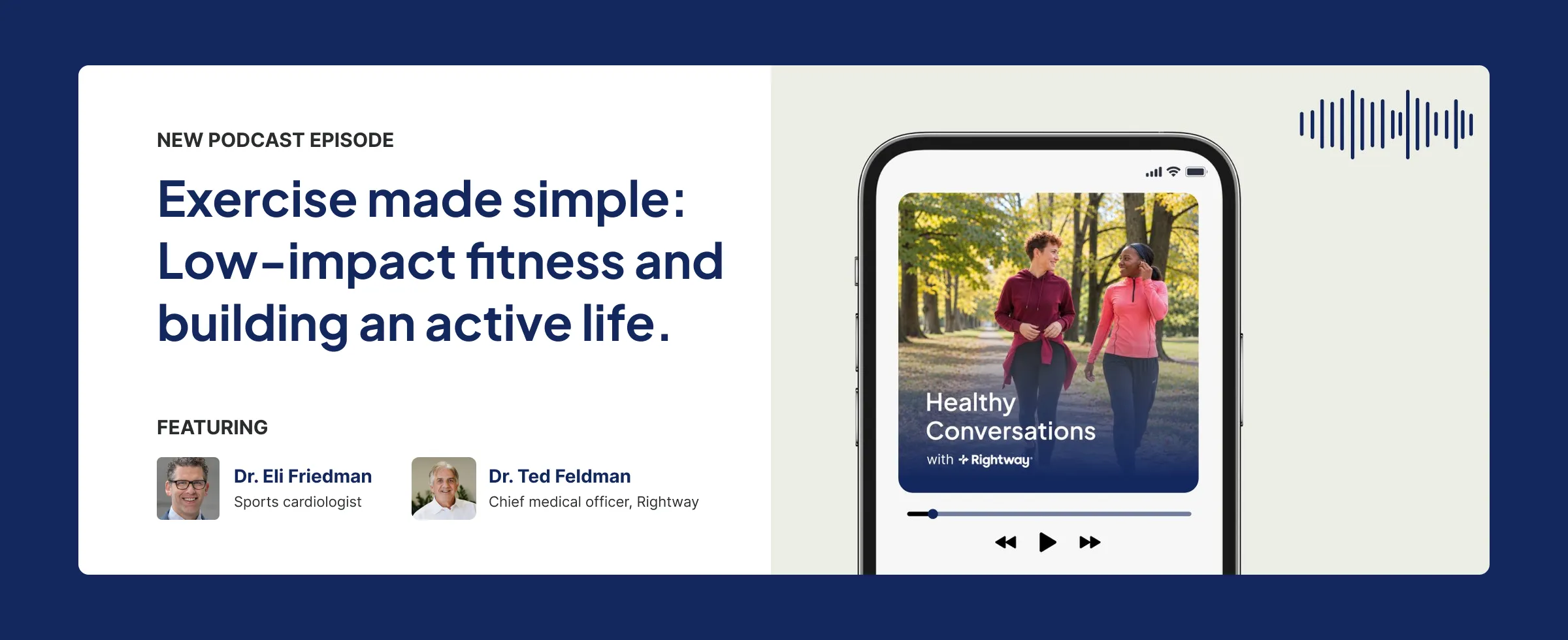
Want to hear more from Dr. Friedman? Rightway’s Chief Medical Officer, Dr. Ted Feldman, sat down with him on our podcast, Healthy Conversations with Rightway, to talk about exercise, low-impact fitness, and what you really need to stay healthy. Listen to their conversation for more expert tips and insights.
Have more questions? Reach out to Rightway.
Our experts can provide personalized guidance, and our health guides can connect you with in-network specialists like gastroenterologists and dietitians.
Log in to your Rightway account to connect with a healthcare expert.
Get StartedSources:
- Centers for Disease Control. 2023. Adult activity: An overview.
- Qui, Yan, et al. 2023. Exercise sustains the hallmarks of health.
- Harvard Health Publishing. 2024. Exercise and fitness.
- Cleveland Clinic. 2025. Cardio or strength training: Which is better?
- Nemoto, K., Gen-no, H., Masuki, S., Okazaki, K., and Nose, H. 2007. Effects of high-intensity interval walking training on physical fitness and blood pressure in middle-aged and older people.
- Centers for Disease Control. 2023. What counts as physical activity for adults.
- Rightway Healthcare. 2026. Exercise made simple: Low-impact fitness and building an active lifestyle.
No gym? No problem. 5 easy ways to stay active.
Exercise made simple: Low-impact fitness and building an active life.


The member experience with Rightway care navigation.

Disputing a medical bill with Rightway care navigation.

Finding a doctor with Rightway care navigation.