The power of healthcare employee engagement: Why it's the key to reaching your benefit goals.


When it comes to achieving your benefit goals, one metric should stand above the rest: your teams' engagement with their healthcare benefits. Many employees see their health plan as a safety net for when they get sick, rather than a resource for ongoing health management.
Benefit administrators often prioritize metrics like cost per employee or plan participation rates, but these pale in comparison to the impact of truly engaging employees in their health benefits. Employee benefits engagement drives better outcomes, lower costs, smarter utilization, and happier teams, which unlocks the full value of your healthcare investment.
Key highlights:
- Healthcare employee engagement is how actively people understand, choose, and use their health benefits throughout the year, beyond simply enrolling in a plan.
- Employers raise engagement by simplifying benefits, communicating year-round, and giving every member a guide to the right care.
- Rightway pairs every member with a dedicated health guide backed by clinicians, turning your benefits package into support your teams use all year.
What does benefits engagement really mean?
Benefits engagement means employees understand, choose, and actively use their healthcare coverage throughout the year. Enrollment alone does not make someone an engaged member. An engaged member:
- Understands the healthcare benefits in their plan.
- Chooses plan options based on their specific healthcare needs.
- Uses healthcare services appropriately, like visiting their primary care physician instead of an emergency department when possible.
- Routinely attends preventive care appointments and screenings.
- Stays informed about changes in their healthcare plan and any new benefits or point solutions available.
The importance of employee engagement in healthcare.
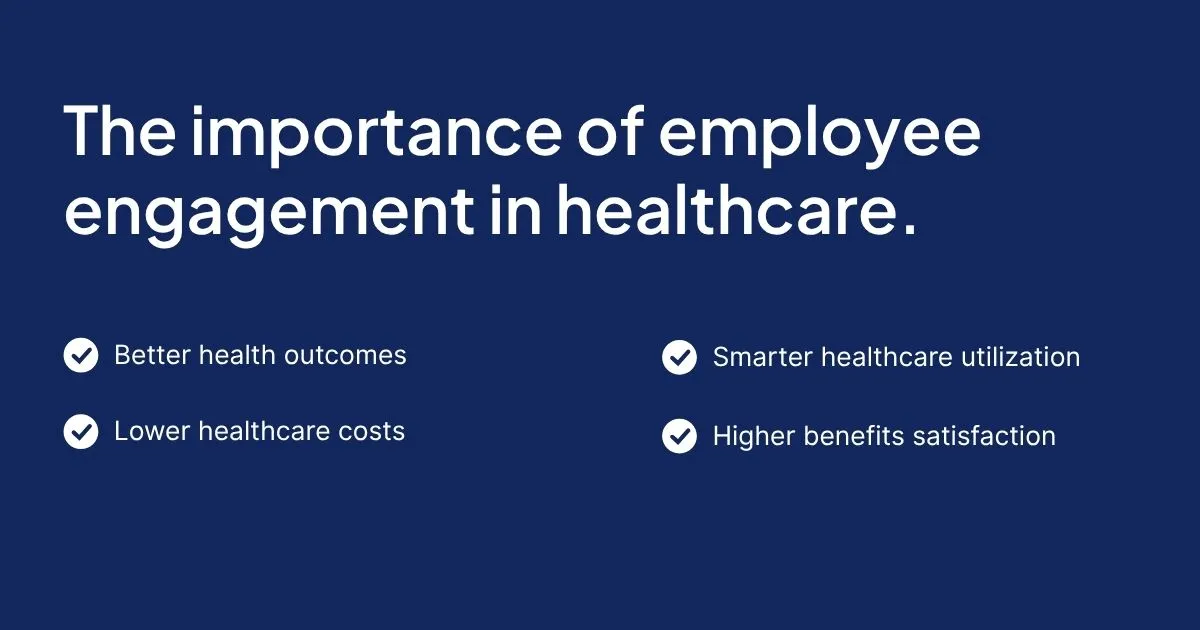
Healthcare employee engagement is important for employers because it drives better outcomes, lower costs, and higher satisfaction across the workforce. When team members take an active role in their health, organizations see:
- Better outcomes: Engaged employees are proactive about their health. They adhere to treatment plans, keep up with regular checkups, and effectively manage chronic conditions, leading to better health outcomes and reduced costs.
- Cost containment: Engagement correlates with reduced healthcare costs due to reduced unnecessary and preventable spending. When employees are informed and engaged with their benefits, they are less likely to pursue unnecessary and expensive medical procedures and better manage high-cost conditions.
- Smarter utilization: Employees who understand their benefits make smarter care decisions, using more preventive services and choosing high-value care settings. According to the National Committee for Quality Assurance (NCQA), 24% of emergency department visits among adults ages 18 to 64 were for nonurgent needs that primary or urgent care could have treated.
- Improved employee health benefits satisfaction: Employees who are engaged and knowledgeable about their benefits report higher satisfaction. This satisfaction translates into higher morale and productivity, which are key goals for organizations.
How to improve employee engagement in healthcare.
Employers improve employee engagement in healthcare by making benefits easy to understand, keeping them visible all year, and tailoring outreach to each person's needs. Human resources (HR) teams can start with six practical steps:
- Translate plan language: Replace terms like deductible and coinsurance with plain explanations and real examples of when to use each benefit.
- Communicate year-round: Send reminders tied to seasonal needs, such as flu shots in the fall or flexible spending account deadlines before year-end.
- Personalize outreach: Segment messages by life stage and health need, so a new parent and a member managing a chronic condition receive different prompts.
- Use the channels your workforce checks: Reach deskless teams by text or app and office teams by email or chat.
- Equip managers: Give managers short talking points so they can point team members to benefits during one-on-ones.
- Ask for feedback: Survey members after open enrollment and again at midyear to find where confusion stalls action.
Best strategies for driving health benefits engagement.
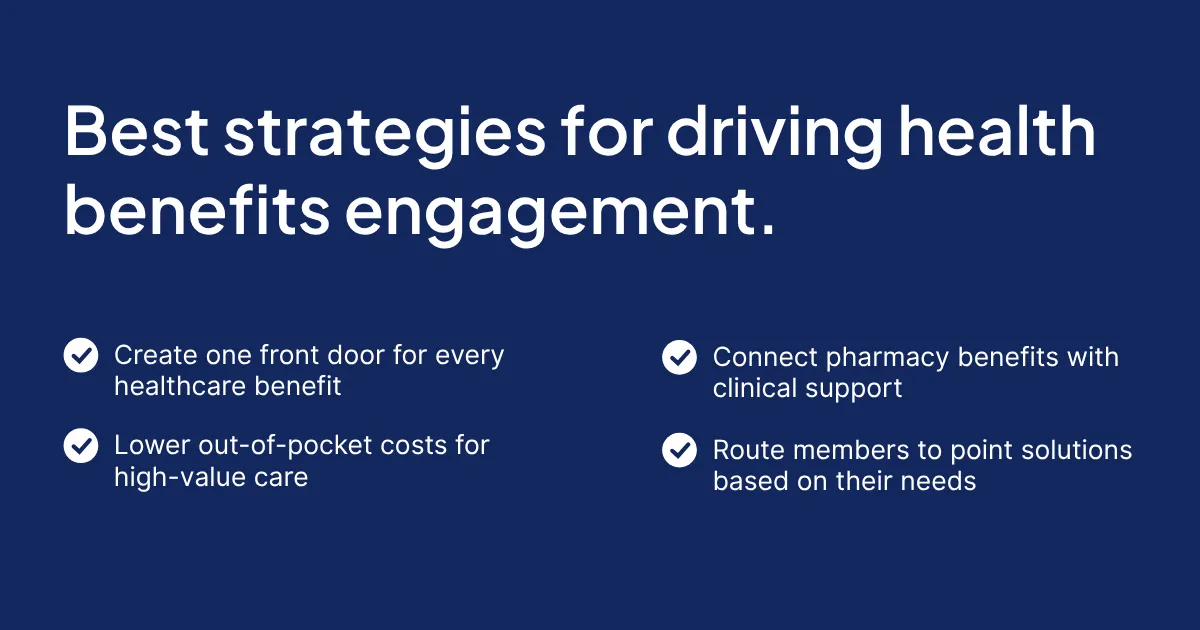
The best strategies for driving health benefits engagement build support into the plan itself, so members get help through their coverage instead of relying on reminders. Communication tells members what exists, while plan design shapes what they do next. Four approaches deliver the strongest results:
1. Offer one front door to every benefit.
A single front door gives members one app and one phone number for every benefit, from medical and pharmacy coverage to mental health programs and point solutions. To set one up:
- Audit your current vendors and list every access point members use today.
- Choose a partner that connects those vendors in one platform.
- Offer a care navigation platform that includes guidance so employees can navigate different vendor options.
Members stop juggling separate logins and hotlines, and they rediscover forgotten programs, which raises utilization of benefits you already pay for. HR teams also field fewer questions.
2. Lower out-of-pocket costs for high-value care.
Value-based plan design cuts copays and coinsurance for services and providers that deliver strong outcomes for less total spend. Price signals steer members toward high-value care without extra outreach. To apply value-based design:
- Review claims to find where members overspend, such as emergency visits for nonurgent needs.
- Reduce or waive copays for primary care, chronic-condition medications, and high-quality specialists or centers of excellence.
- Keep cost sharing higher for low-value alternatives.
Members pay less for better care, and employers reduce avoidable claims.
3. Connect pharmacy benefits to clinical support.
Pharmacy claims show when members skip refills, start high-cost drugs, or take medications that interact. Connecting your pharmacy benefits to clinical support turns prescription data into timely outreach.
Choose a neutral pharmacy benefits manager (PBM) that shares claims data with your care navigation team. Pharmacists can then review medications for people managing chronic conditions and flag lower-cost alternatives, such as generics or biosimilars, before members fill a prescription. Members stay on therapy and avoid costly complications, while employers cut unnecessary drug spend.
4. Route members to point solutions that match their needs.
Employers often add point solutions for diabetes, musculoskeletal care, mental health, and fertility, but members rarely know which program fits their situation. Needs-based routing connects each member to the right program when a need appears.
Use claims data and care navigation referrals to identify eligible members, then invite them directly instead of waiting for sign-ups. Track enrollment and outcomes for every vendor, and renegotiate or drop low performers. Members get targeted support faster, and employers stop paying for services that sit unused.
How care navigation drives healthcare member engagement.
Care navigation drives healthcare member engagement by giving employees a dedicated guide who answers questions and handles care tasks the moment a need comes up. HR communication tells members what their plan includes, while care navigation helps them use that coverage. A health guide supports members by:
- Answering questions in the moment: A guide explains coverage and expected costs when a member needs care, not weeks later in an email.
- Matching members to the right provider: Guides compare in-network options on cost and quality and direct each member to high-value care.
- Promoting preventive care: Care navigation solutions like Rightway flag overdue screenings and checkups, then book the appointment for the member.
- Overcoming barriers to care: Guides resolve scheduling conflicts, review confusing bills, and surface lower-cost options before members delay treatment.
Raise employee benefits engagement with Rightway's care navigation.
Healthcare employee engagement grows when support sits inside the benefits package, not in an annual email. Rightway's care navigation pairs every member with a dedicated health guide, backed by clinicians, who answers questions, compares costs, and books appointments through the Rightway app.
Rightway also integrates pharmacy benefits with care navigation, so health guides and pharmacists work from the same member data to keep members on the right medication at the right price. Employers get one partner for navigation and pharmacy, and members get a single place to turn for help.
Ready to raise healthcare member engagement? Request a demo with a Rightway expert.
Turn your benefits into support your teams use with Rightway.
Book a demoFrequently asked questions.
Member engagement in healthcare affects costs by changing how members use care, and the size of the effect depends on your population, plan design, and available support. Engaged members tend to choose lower-cost settings, keep up with preventive care, and stay on treatment, which reduces avoidable emergency visits and complications.
To estimate the impact for your workforce, compare 12 months of claims for engaged and unengaged members. Then pair engagement with other data-driven cost strategies to lower healthcare costs.