Care navigation platform implementation guide for employers.


Your employees may have access to strong healthcare benefits, but that doesn’t mean they know how to use them. When employees can’t understand their coverage, find the right provider or resolve a healthcare issue, those questions often come back to your HR and benefits team.
A care navigation platform gives employees one place to get personalized support throughout their healthcare journey. But introducing this system requires more than choosing a vendor and announcing a launch. You need to connect it to your existing benefits, data sources, internal teams and employee communication strategy.
This care navigation platform implementation guide for employers outlines nine steps for building a program that is easier for employees to use, more manageable for HR teams and better positioned to improve healthcare outcomes and costs.
Key highlights:
- Care navigation platform implementation is the process of connecting a navigation solution to an employer’s benefits, data, internal teams and member engagement strategy.
- Employers should begin with their current healthcare challenges and define clear goals before evaluating platform features.
- Program performance should be measured across engagement, member experience, healthcare utilization and financial impact.
- Rightway provides clinical guidance, connected data, personalized member support and hands-on implementation support for employers.
How to have a successful care navigation implementation: 9 steps
A successful care navigation implementation requires more than launching a new platform. These nine steps will help you align the program to your benefits strategy, prepare your data and internal teams and build an experience employees understand and use.
1. Assess current healthcare benefits challenges.
Before choosing a platform, identify the problems you need it to solve. Your employees may struggle to find in-network providers, understand their coverage or determine which benefits vendor to contact. Your HR team may spend hours answering individual questions, escalating billing problems or directing employees to underused point solutions. Review the information already available to you, including:
- Low utilization of valuable benefits and point solutions
- Difficulty finding high-quality, in-network providers
- Overuse of emergency rooms or other high-cost settings
- Delayed preventive care or follow-up appointments
- Billing errors and unresolved claims questions
- Too much HR time spent on individual healthcare issues
Look for both employee friction and administrative burden. A low-performing benefits program may not reflect a lack of valuable resources. It may reflect how difficult it is to find and use those resources. 40% of adults with employer-sponsored coverage say it is somewhat or very difficult to understand what their insurance will and will not cover, according to KFF.
Learn why a proactive healthcare strategy begins with care navigation.
2. Define care navigation goals.
Once you understand your current challenges, define what you expect care navigation to improve. Translate each priority into an outcome that can guide vendor selection, implementation decisions and post-launch reporting. Your goals may include:
- Improving employees’ understanding of their benefits and available resources
- Reducing avoidable emergency department and out-of-network utilization while guiding employees to appropriate, lower-cost care settings
- Decreasing the volume of individual healthcare questions directed to HR
- Producing measurable improvements in healthcare cost and employee satisfaction
You should also define meaningful engagement before launch. Registration is important, but it doesn’t show whether an employee received value. An employee who connects with a guide, schedules an appointment or resolves a billing issue has moved beyond activation and taken a measurable action.
3. Map the existing health benefits ecosystem.
Your care navigation platform should make your existing coverage easier to use, not become another disconnected resource employees have to navigate. Start by mapping every vendor and program involved in the employee healthcare experience, including your carrier or TPA, benefits administrator, provider networks, virtual partners, behavioral health resources, specialty programs and pharmacy benefits manager (PBM).
For each vendor, understand what it provides, who is eligible and how employees access it. You should also identify whether data can be shared and what happens when an employee needs support from more than one vendor. A complete ecosystem review should clarify:
- Which benefits the care navigation team should recommend or support
- Where services overlap or create a confusing employee experience
- Which vendors can exchange eligibility, claims or referral information
- Who owns an employee’s issue when it crosses multiple organizations
Mapping the ecosystem also helps your navigation partner configure the platform around your actual benefits. Guides should understand your plans, networks, programs and escalation contacts before employees begin asking for help.
4. Evaluate care navigation platform features.
Once you know what the program needs to accomplish, evaluate how each potential partner supports those outcomes. A platform may look easy to use during a demo but still lack the clinical expertise, data capabilities or service model required to resolve complex employee needs.
A strong care navigation platform stands out across seven core areas, from clinical guidance and provider support to billing help, specialty pharmacy and reporting.
| Care navigation platform features. | Importance. | What to evaluate. |
|---|---|---|
| Dedicated clinical guides. | Employees need trusted people who can understand their needs and recommend an appropriate next step. | Clinical credentials, continuity of support, guide availability and escalation processes. |
| Clinical navigation. | Clinical expertise helps identify care gaps, support complex cases and guide employees before needs become more serious. | Access to nurses, clinical triage, proactive outreach and care coordination. |
| Provider search and appointment help. | A provider directory does not guarantee that an employee will find appropriate, available and affordable care. | Quality standards, network accuracy, cost information and scheduling support. |
| Billing and claims support. | Medical bills and denied claims are common sources of employee frustration and HR escalation. | Bill review, appeals support, carrier coordination and resolution ownership. |
| Specialty pharmacy support. | Employees using specialty medications may have questions about side effects or treatment plans. | Clinical guidance that supports medication access, affordability, adherence, monitoring and side-effect concerns. |
| Digital member experience. | Members need a simple way to access help when and how they prefer. | Mobile and web functionality, chat, phone, email, accessibility and language support. |
| Reporting and analytics. | You need visibility into what employees use, what actions the team takes and what outcomes change. | Reporting frequency, intervention data, ROI methodology and transparency. |
5. Plan healthcare data, eligibility and integrations.
Your care navigation platform needs accurate information about who is eligible, what benefits are available and how employees are using the healthcare system. Planning these data connections early helps prevent launch delays and gives the team the context needed to provide relevant, proactive support.
You may not need every integration live on day one. Start with the data required for members to access the platform, then prioritize additional feeds based on your goals, timeline and technical resources.
Eligibility and member data.
Eligibility data determines who can use the platform and which plans, programs and resources each member should see. Work with your benefits administrator, carrier or internal team to establish a reliable process for sending and updating this information. Your eligibility plan should define:
- Which employees and dependents are eligible.
- How plan enrollment and benefit classes are identified.
- How frequently eligibility information will be updated.
- How terminations, status changes and file errors will be handled.
Claims and vendor data.
Claims and vendor data can give the care team a clearer view of member needs, utilization patterns and opportunities for support. Depending on your program, integrations may include:
- Historical and ongoing medical claims.
- Provider network, quality and cost information.
- Point solution referrals and utilization data.
Privacy, security and reporting requirements.
Because these integrations involve sensitive healthcare information, involve your privacy, security, legal and procurement teams early. Waiting until the end of implementation to begin these reviews can create avoidable delays. Your review should cover:
- Applicable HIPAA privacy and security obligations, including whether a business associate agreement is required.
- Encryption, secure file transfer and role-based access.
- Data retention, deletion and incident response procedures.
- Security documentation, audit rights and reporting standards.
6. Customize the member experience.
During implementation, work with your care navigation partner to understand how employees access information, where they work, which languages they speak and what barriers may prevent them from using their benefits.
Consider the differences between wired employees who regularly use email and digital tools and non-wired employees who may work in the field, on a production floor or away from a computer. The platform, communications and outreach strategy should be designed around how each population is most likely to engage.
A customized member experience should:
- Provide digital, phone, email, onsite and printed options for both wired and non-wired employees.
- Offer multilingual support, translated communications and accessible resources for employees and their families.
- Tailor communications by location, employee group, health plan or workforce segment.
- Use proactive outreach to connect with members when data signals that they may need support.
Explore the role of healthcare in employee retention.
7. Create an activation and communications plan.
A single launch email won’t create sustained utilization. Your communication plan should explain what the platform does, when employees should use it and how it fits with their existing benefits.
Plan communications across three stages: before launch, during open enrollment and throughout the year.
Pre-launch communications.
Pre-launch communications should create familiarity before members are asked to register. They should lead with practical examples of how the program can help, such as finding a provider, understanding coverage or resolving a medical bill. Your pre-launch plan may include:
- An announcement from HR or company leadership.
- A short email series built around common member use cases.
- Manager talking points, intranet content and platform demonstrations.
- Printed and onsite materials for non-wired populations.
Open enrollment activation.
Open enrollment is a valuable opportunity to introduce care navigation because employees are already reviewing their coverage and thinking about their healthcare needs. Your open enrollment activation may include:
- Benefits fair participation and live platform demonstrations.
- Employee webinars and question-and-answer sessions.
- Benefit education presentations and plan selection support.
- Targeted email campaigns and post-enrollment reminders.
Ongoing engagement campaigns.
Sustained benefits engagement requires communication throughout the year, not just during launch. Two-thirds of Americans are open to receiving information from their employer outside of open enrollment to help them better understand their benefits, according to Voya. Build campaigns around moments when employees are most likely to need support, then use engagement data to refine the messages and channels that drive meaningful action.
Ongoing campaigns may focus on:
- Finding a primary care provider or scheduling preventive care.
- Understanding a new diagnosis or preparing for a procedure.
- Resolving a medical bill, claim or coverage question.
- Reintroducing the platform during onboarding, life events and seasonal healthcare needs.
8. Train HR and benefits teams.
Care navigation should reduce the burden on your HR team, but employees will still ask HR how the program works. Your team needs enough information to explain the benefit and direct employees to the right place.
Before launch, training should cover:
- What the platform does and which employees or dependents are eligible
- How employees register and contact the care team
- Common reasons to use the service
- Privacy boundaries, escalation processes and client support contacts
9. Measure healthcare navigation performance and optimize.
Defining how you'll measure success before launch gives you a baseline and ensures your partner's reporting aligns with the goals set at the start of implementation. Evaluate the platform across engagement, member experience and financial impact. No single healthcare program metric can show whether the system is working.
Engagement metrics.
Engagement metrics should show whether employees know about the platform and whether they are using it to take meaningful action. Track measures such as:
- Employee activation and repeat engagement
- Inbound interactions and responses to proactive outreach
- Referrals, appointments and completed care actions
- Changes in primary care utilization
Member experience metrics.
Satisfaction scores are important, but they should be paired with measures that show whether employees received timely support and reached a resolution. Your reporting may include:
- Member satisfaction and Net Promoter Score
- Response time and time to resolution
- Appointment completion and billing issue resolution
- Changes in member benefits understanding
Cost and ROI metrics.
Financial reporting should connect navigation activity to changes in utilization and spending. Confirm the savings methodology, data sources and measurement period before implementation begins. Evaluate measures such as:
- Redirection to high-quality, lower-cost sites of care
- Avoided out-of-network or unnecessary emergency room utilization
- Changes in medical claims costs and high-cost claimant outcomes
- Program return on investment and progress toward lower healthcare costs
Measurement is increasingly important as employer healthcare spending continues to rise. Mercer found that average health benefit cost per employee increased 6% in 2025, with a 6.7% increase projected for 2026.
Implement care navigation with Rightway.
Rightway Care Navigation gives employers clinical expertise, personalized member support and a connected benefits experience without creating more work for HR. We oversee the entire rollout from kickoff through launch. A dedicated implementation manager coordinates technical onboarding, plan configuration, member communications and testing.
Our team also works directly with carriers, TPAs and benefits administrators to handle eligibility and claims integrations and can pair navigation with a transparent PBM solution for a fully connected benefit.
Rightway gives employers:
- A dedicated implementation manager who owns the project plan, coordinates stakeholders and keeps milestones on track.
- Direct support with carriers, TPAs and benefits administrators to manage eligibility, claims and technical onboarding.
- A customized implementation plan built around your benefits structure, workforce needs and target launch date.
- Tailored member communications and activation strategies designed for wired, non-wired and multilingual populations.
- Launch readiness testing, go-live reporting and a structured transition to the Client Success team for ongoing support.
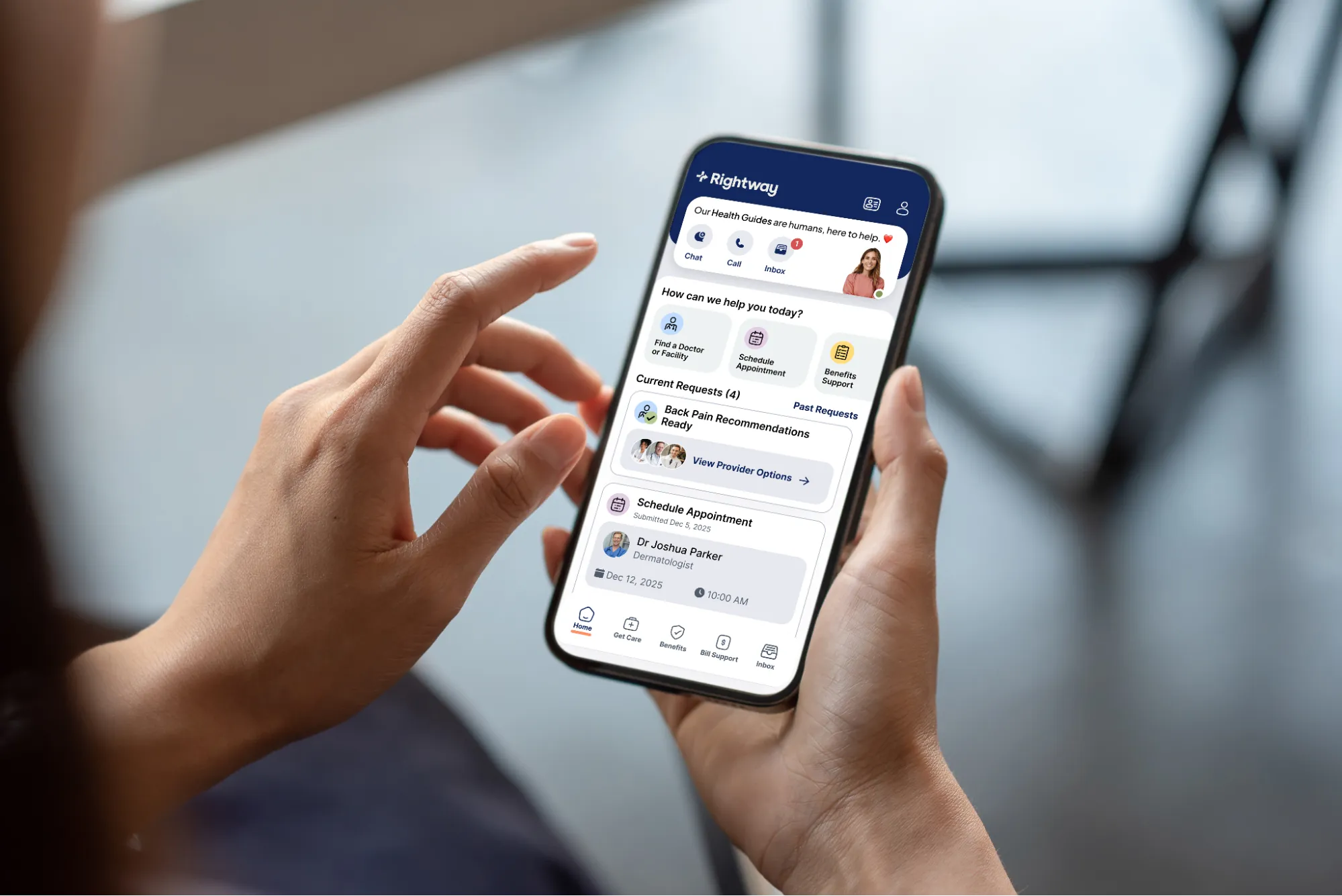
Book a demo today to explore how Rightway's care navigation can support your organization’s healthcare benefits goals.
Frequently asked questions.
A care navigation platform is a single member experience that combines expert human support, benefits information, provider guidance and technology. It helps employees understand coverage, find in-network care, compare options, schedule appointments, resolve billing issues and connect with other employer-sponsored programs.
The strongest platforms do more than provide a directory or automated answer. They give members access to experts who can understand their situation, recommend a next step and help complete it.