What is a drug formulary? Tiers, costs and how it works.


A formulary is a list of prescription drugs that a health insurance plan or pharmacy benefit manager (PBM) will cover for its members. It’s the plan’s approved drug list (sometimes called a preferred drug list). A formulary serves as a guide, helping manage medication costs while ensuring patients have access to safe and effective treatments.
Formulary design aligns pharmacy strategy with broader organizational goals—whether that means reducing healthcare spend, improving access to certain medications like GLP-1s, or improving employee health outcomes.
Key highlights:
- A drug formulary is a list of prescription medications covered by a health plan or pharmacy benefit manager (PBM).
- Formularies help balance medication access, clinical effectiveness and pharmacy benefit costs.
- Open and closed formularies determine which medications are covered and how much flexibility members have when accessing treatments.
- Rightway uses an evidence-based, fiduciary-aligned approach to formulary management that prioritizes clinical value, member outcomes and cost-effectiveness.
Why drug formularies matter for employers.
Drug formularies do more than determine which medications are covered by a health plan. They play a significant role in controlling pharmacy costs, influencing employee access to medications and supporting long-term health outcomes. For employers, understanding the design of formularies can help ensure pharmacy benefits align with both financial objectives and workforce health needs.
Pharmacy spend control.
Formulary design is one of the most effective ways to manage pharmacy benefit costs. By encouraging the use of clinically appropriate, cost-effective medications, formularies help employers control prescription drug spending without limiting access to necessary treatments.
Employee medication adherence.
Out-of-pocket costs shape whether employees start and continue prescribed treatments. Well-designed formularies place effective medications in lower-cost formulary tiers whenever possible, helping reduce financial barriers and improve medication adherence.
Access to specialty medications.
As specialty drugs and treatments such as GLP-1 medications become more common, formulary decisions directly impact access and affordability. Employers should understand how their formulary balances coverage for high-cost therapies with overall plan sustainability.
Total cost of care management.
The cheapest medication is not always the lowest-cost healthcare decision. Effective formularies consider clinical outcomes alongside pharmacy spend, helping employers reduce avoidable complications, hospitalizations and other downstream healthcare costs.
How prescription drug formularies are developed.
Drug formularies are developed using a combination of clinical evaluation and cost considerations. Most health plans rely on an independent Pharmacy & Therapeutics (P&T) committee made up of physicians, pharmacists and other clinical experts to evaluate medications based on factors such as safety, effectiveness and therapeutic value. When multiple medications yield similar clinical outcomes, you can enforce lower-cost options to manage overall pharmacy spend.
PBMs may also consider financial factors when designing formularies, including negotiated rebates and discounts from drug manufacturers. These factors impact preferred placement, formulary tier, member cost share and coverage requirements.
Formularies are reviewed and updated regularly as new medications become available, clinical guidelines change and drug pricing evolves. Depending on how broad or restrictive the coverage is, health plans generally use one of two formulary models: open or closed.
Open formularies.
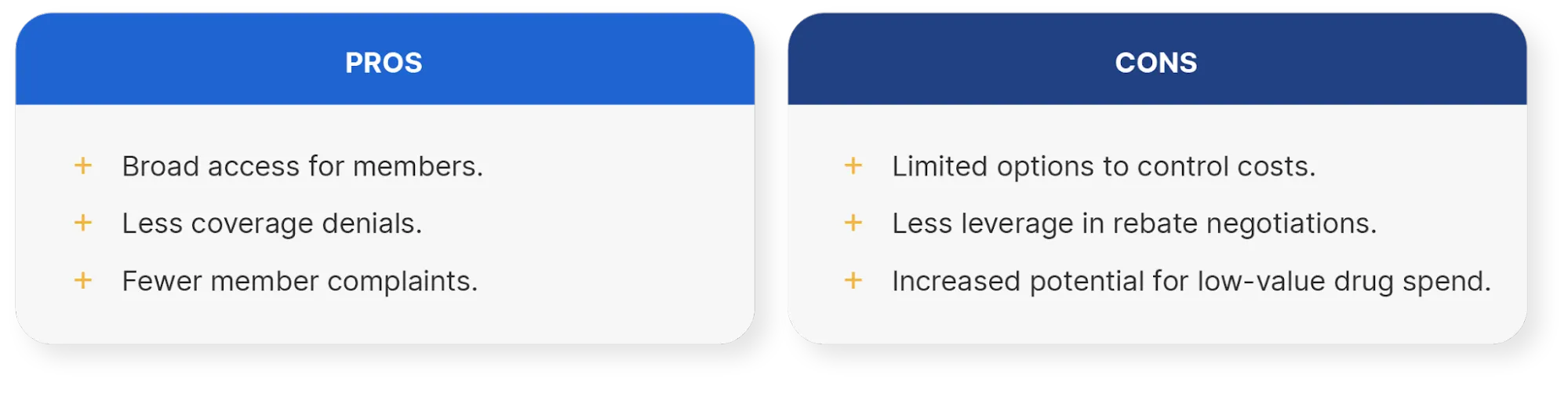
An open formulary provides coverage for a very broad range of prescription medications, with few, if any, drugs excluded. Patients and their doctors have greater flexibility as virtually all prescription drugs are on the menu and even higher-cost brand or specialty drugs at some level.
Closed formularies.
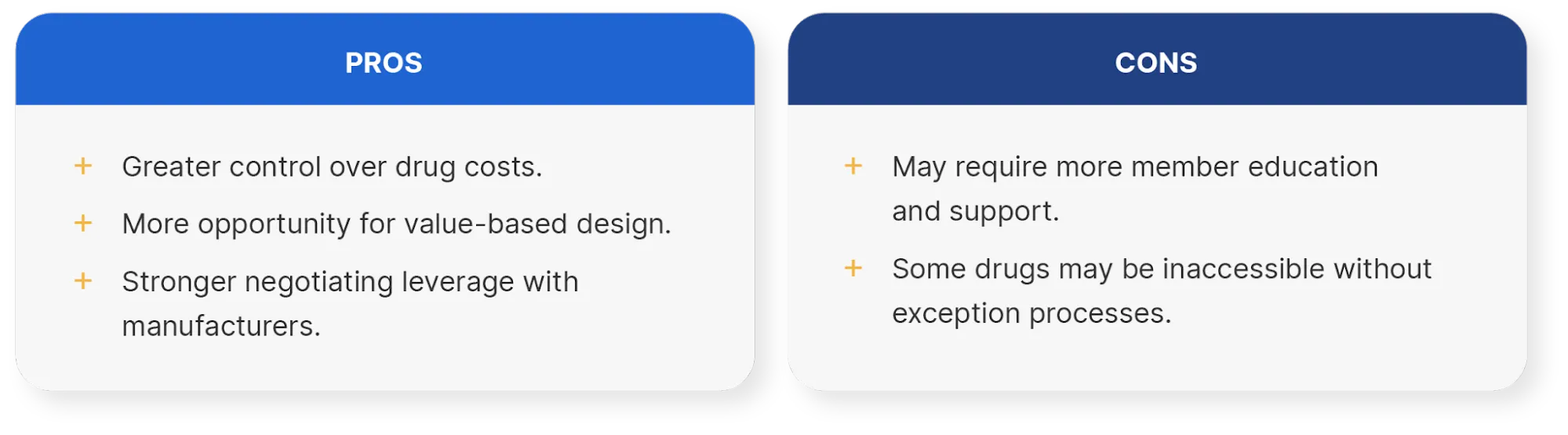
A closed formulary limits coverage to a specific list of approved drugs. Medications not on the formulary are generally not covered by the plan so the insurer won’t pay for them. If a physician prescribes a non-formulary drug, the member would have to either pay the full price out of pocket or use a covered alternative. According to research by Drug Channels, each of the three largest PBMs now excludes more than 600 products from its standard formulary.
How do drug tiers work?
Drug tiers work by grouping medications into cost-sharing levels, allowing plans to manage pharmacy spend while keeping members on clinically appropriate treatments.
Formulary drug tiers represent the different levels of coverage and member cost-sharing, with lower tiers typically offering lower-cost or preferred medications and higher tiers including specialty or non-preferred drugs with higher out-of-pocket costs.
The purpose of a tiered formulary is to help manage pharmacy spend by incentivizing the use of cost-effective, clinically proven treatments while ensuring patients have access to the medications they need. This structure allows plan sponsors to control costs without compromising the quality of care by guiding prescribing and utilization behavior.
Formulary tiers can vary by plan, but they generally look like the following:
| Drug tiers. | What they cover. | Examples of drugs. |
|---|---|---|
| Tier 1 | Generic medications, which include low-cost, clinically effective generics typically used as first-line treatments. | Examples of tier 1 drugs include treatments for common conditions such as high blood pressure, high cholesterol and allergies. |
| Tier 2 | Preferred brand-name drugs and non-preferred generics, typically higher-cost generics or lower-cost brand-name medications. | Examples of tier 2 drugs include preferred treatments for chronic conditions such as diabetes, cardiovascular disease and asthma. |
| Tier 3 | Non-preferred brand-name drugs and some specialty drugs, usually brand medications with less favorable pricing or those with alternative therapeutic options available. | Common tier 3 drugs include higher-cost or non-preferred brand-name options for conditions such as depression, ADHD and digestive disorders. |
| Tier 4-5 | Specialty medications, including high-cost treatments such as biologics or therapies that require special handling or administration. | Examples of tier 4 and tier 5 drugs include specialty treatments used to manage conditions such as cancer or rheumatoid arthritis. |
Learn more: What employers need to know about generic drug pricing.
Formulary management strategies for PBMs.
Formulary management is one of the primary ways pharmacy benefit managers balance clinical effectiveness, member access and cost control. By determining which medications are covered and how they are covered, PBMs can influence pharmacy spend, prescribing behavior and employee access to treatment.
The most effective formulary management strategies combine clinical oversight, utilization management and transparent pricing practices to promote safe, appropriate and cost-effective medication use.
Evidence-based formulary design.
A strong PBM formulary starts with clinical evidence. Pharmacy benefit managers rely on P&T committees to evaluate medications based on safety and effectiveness. This process helps ensure covered drugs provide meaningful clinical benefits while reducing unnecessary spending on higher-cost alternatives that may offer similar outcomes.
Utilization management.
PBMs often use care utilization management programs to encourage appropriate medication use and support cost-effective care. Common approaches include prior authorization, step therapy and quantity limits, which help ensure medications are prescribed according to established clinical guidelines while maintaining access to necessary treatment.
Prior authorization and step therapy.
Many PBMs use prior authorization and step therapy programs to help ensure medications are prescribed appropriately and according to established clinical guidelines. These tools encourage the use of safe, effective and cost-conscious treatment options while preserving access to medications when clinically necessary.
Ongoing formulary optimization.
Formularies are continuously reviewed as new medications enter the market, clinical guidelines evolve and drug pricing changes. Regular evaluation helps ensure formularies remain aligned with current evidence, support positive health outcomes and help employers manage pharmacy benefit costs over time.
Optimize formularies and reduce costs with Rightway.
Pharmacy benefit managers play a critical role in managing formularies to balance clinical efficacy, member access and cost control. How they do it has a direct impact on both pharmacy spend and employees' health. Unfortunately, most traditional PBMs structure formularies to maximize pharmaceutical rebates and revenue, not to achieve the lowest net cost or best outcomes.
Rightway PBM takes a different approach, prioritizing clinical integrity and cost-effectiveness. Our P&T committee is fully independent and guided by evidence-based criteria, not rebate contracts: no rebate traps and no spread pricing. The result is a smarter, more sustainable formulary strategy that supports better care and delivers meaningful savings and keeps your plan fiduciary aligned.
Book a demo today and explore how Rightway can help you optimize your drug formulary to reduce costs.
Frequently asked questions.
A formulary medication is a prescription drug included on a health plan's list of covered medications. Drugs on the formulary are generally eligible for coverage, although the level of coverage and member cost share may vary depending on the formulary tier.