Technology trends driving PBM efficiencies in 2026.


Technology is changing what pharmacy benefit managers (PBMs) can actually do for employers and members. These advances give employers greater visibility into cost trends and spending, while giving members faster, clearer answers when they need them.
The technology trends driving PBM efficiencies in 2026 are reshaping pharmacy benefits from the ground up, and employers who understand them are better positioned to control costs and support their workforce. Employers making real progress on lowering pharmacy spend and improving the member experience share a common trait: they evaluate PBM industry trends and match their program design to reflect them, instead of defending outdated processes because a vendor calls them standard.
| Top PBM industry trends in 2026. | How it works. | Benefits for employers. | Benefits for members. |
|---|---|---|---|
| AI-assisted pharmacy navigation. | Faster analysis of member information, claims patterns, and clinical data to support pharmacist guidance | Earlier identification of avoidable, high-cost spend before claims are paid | Faster answers and fewer dead ends on coverage and medication questions |
| Electronic prior authorization. | Electronic exchange of approval requests and clinical documentation between prescribers and the PBM | Less administrative work and shorter delays for unresolved high-cost claims | Shorter waits between receiving a prescription and filling it at the pharmacy |
| Member-facing technology. | One app or portal for claims status, prior authorization progress, cost estimates, and support | Fewer pharmacy benefit questions routed to HR | Easier access to prescription help and request updates without calling multiple numbers |
| Data-driven risk scoring. | Use of claims and clinical data to identify members who may need intervention before a costly event | More proactive management and less reactive spending | Earlier outreach and support before a condition worsens |
| Integrated pharmacy and medical data analytics for total cost visibility. | Combined pharmacy and medical claims in one data set instead of two disconnected systems | Visibility into total cost of care rather than pharmacy spend alone | Care decisions based on a more complete view of member health |
| Employer-facing reporting portals. | Live access to claims, utilization, and spend through an employer dashboard | Ongoing visibility for audits, renewals, and plan decisions | Faster plan design changes based on current data |
What factors are driving new PBM industry trends?
New PBM industry trends are emerging because employers face rising drug costs, manual administration, fragmented data, member frustration, and greater pressure to demonstrate that their pharmacy benefit manager is delivering measurable value.
The key factors driving new PBM industry trends include:
- Misaligned pricing models: Employers must manage list prices, rebates, pharmacy reimbursement, specialty markups, and member cost sharing at the same time. An opaque drug pricing model makes it difficult to determine whether reported discounts produce a lower total net cost.
- Growing GLP-1 utilization: GLP-1 drugs made up 11.4% of annual pharmacy claims in 2025, according to the International Foundation of Employee Benefit Plans. That growth alone forces plans to modernize how they manage high-cost, high-demand therapies.
- Manual administration: Prior authorization, appeals, and eligibility verification still run through phone calls and fax machines at many PBMs, adding delay and labor cost that automation could remove within weeks rather than years.
- Limited pharmacy data access: Employers often receive delayed or incomplete records. Without claim-level pricing, rebate information, and consistent utilization reports, benefits teams struggle to audit spending, explain performance, or identify emerging cost drivers.
- Member confusion: Questions about medication coverage, cost, pharmacy networks, and authorization status frequently reach HR because members do not know where else to go. Unresolved member confusion can delay treatment and increase the workload placed on benefits teams.
Top 6 PBM trends for 2026.
The most important PBM trends for 2026 combine automation with human expertise. Each one should make pharmacy benefits easier to manage, to measure, and to use.
Technology shouldn’t create another layer between a member and the help they need. It should give pharmacists and benefits teams better information so they can take action sooner.
1. AI-assisted pharmacy navigation for lower-cost care decisions.
AI-assisted pharmacy navigation uses machine learning and data-processing tools to organize information for pharmacists. It can summarize a member’s claims history, identify medication gaps, surface possible lower-cost options, and flag questions that require further review.
A pharmacist still evaluates the member’s medication, health needs, coverage, and treatment plan before making a recommendation. This clinician-led approach to pharmacy care navigation helps employers gain efficiency without turning high-stakes pharmacy decisions over to an automated system.
By organizing information before a pharmacist reviews the case, the technology supports:
- Faster access to relevant member and claim information
- Earlier identification of therapy gaps or adherence risks
- More time for pharmacists to focus on complex member needs
- Better identification of lower-cost, clinically appropriate medications
2. Electronic prior authorization for faster approvals.
Electronic prior authorization allows prescribers, pharmacies and pharmacy benefit administrators to exchange requests and clinical information through connected systems. It replaces workflows that rely on faxed forms, phone calls and manual status checks.
Automated processes can confirm whether authorization is required, request the appropriate documentation and route the case to the right reviewer. One in three insured adults in the U.S. describes prior authorization as a major barrier to receiving care, according to The Kaiser Family Foundation. Moving these requests through electronic workflows can reduce delays, resolve straightforward cases faster, and direct more complex requests to a pharmacist or physician for clinical review.
A more connected process can result in:
- Fewer incomplete authorization submissions
- Less time spent calling providers for missing information
- Faster identification of covered treatment alternatives
- Clearer status information for members and prescribers
3. Dedicated app and self-service tools for easier benefits access.
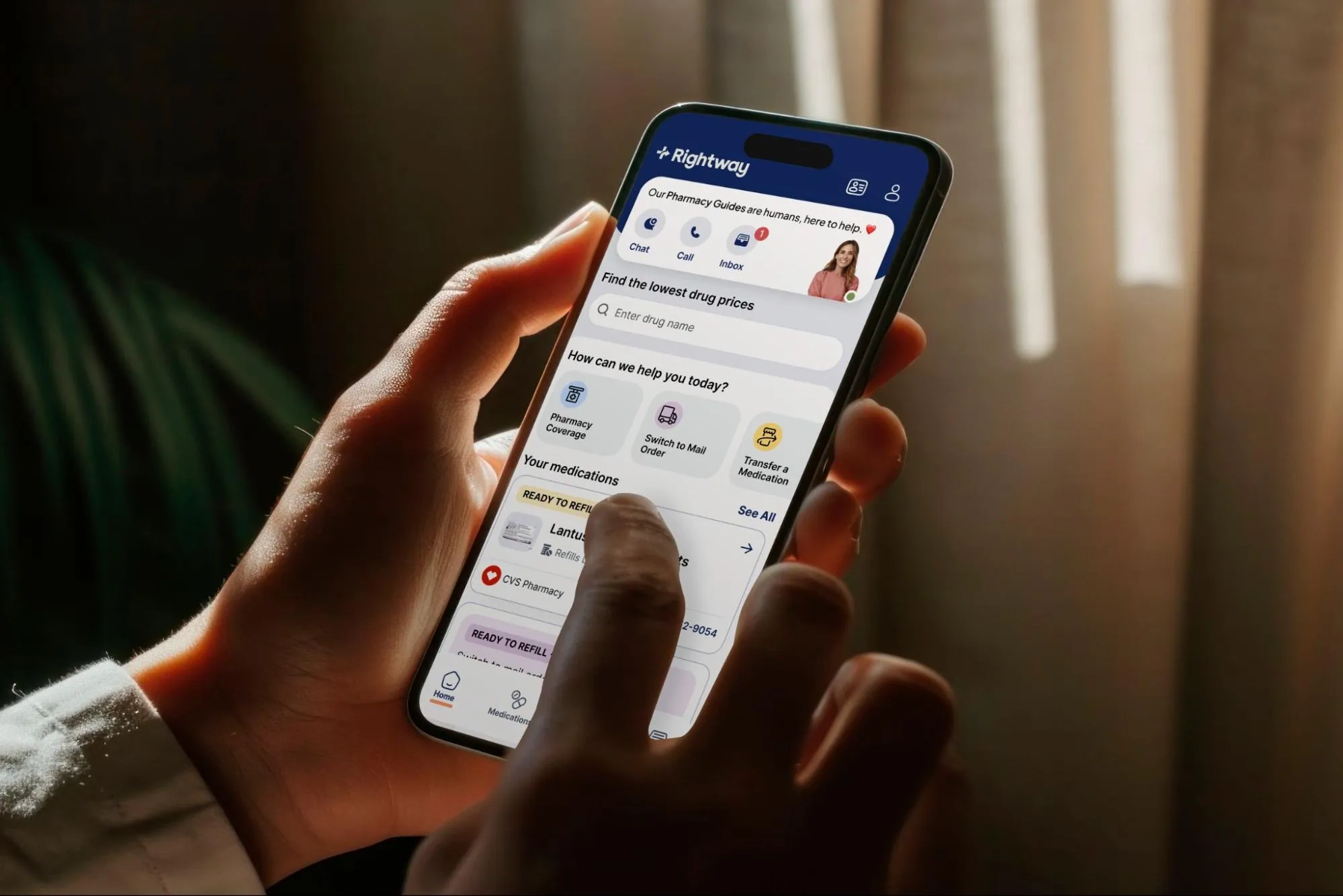
Member-facing technology gives employees a central place to review pharmacy benefits, compare medication costs, find in-network pharmacies, track requests, and contact their support team.
A useful app helps members act on the information they find. A member who discovers that a prescription isn’t covered should be able to connect with a pharmacy expert who can explain the reason, contact the prescriber, or identify an appropriate alternative.
For members, a dedicated app and self-service tools mean:
- Real-time medication and pharmacy price comparisons
- Visibility into claims and prior authorization status
- Direct access to pharmacy benefit information
- Secure communication with pharmacists and pharmacy technicians
4. Data-driven risk scoring for earlier member intervention.
Data-driven risk scoring uses medical and pharmacy claims, prescription history, diagnoses, and utilization patterns to identify members who may face a costly or clinically significant event.
For example, the system may identify a member who has stopped refilling an important medication, hasn’t received recommended follow-up care, or has a new diagnosis without a corresponding treatment plan. This information can trigger high-risk member engagement from a pharmacist, nurse, or health guide.
Earlier identification helps clinical teams provide:
- Earlier identification of medication adherence gaps
- Proactive support for members with complex conditions
- Better prioritization of clinical outreach
- Fewer missed opportunities to address access barriers
- Improved coordination across medical and pharmacy needs
5. Integrated pharmacy and medical data analytics for total cost visibility.
Integrated data analytics connect prescription activity with medical claims, diagnoses, utilization, and care history. This connection allows employers and clinical teams to understand how medication decisions affect the broader cost and quality of care.
A prescription may appear expensive when reviewed in isolation but prevent a hospitalization or complication. Another medication may look cost-effective on the pharmacy report while failing to control the member’s condition. Integrated data helps teams evaluate these outcomes together.
Connecting pharmacy and medical information provides:
- A more complete view of total healthcare spending
- Better identification of care gaps and avoidable utilization
- Stronger measurement of pharmacy program outcomes
- Coordinated support across pharmacy and medical benefits
6. Employer-facing reporting portals.
Employer-facing reporting portals give benefits teams direct access to pharmacy claims, spending, utilization, rebates, member costs, and clinical program performance. Instead of waiting for a static report at the end of the month or quarter, employers monitor pharmacy benefit performance throughout the plan year.
The strongest portals allow benefits teams to examine the claim-level information behind reported results, identify emerging cost drivers, and track whether the PBM is meeting its contractual commitments. Technology should make pharmacy performance easier to investigate, not simply present high-level savings figures without the data needed to validate them.
With the right reporting tools, employers gain:
- Current visibility into pharmacy spending and utilization
- Claim-level data for audits and contract validation
- Faster identification of high-cost drugs and emerging trends
- Clear reporting on rebates, member costs, and clinical interventions
- Easier preparation for renewals and performance reviews
See an innovative PBM in action
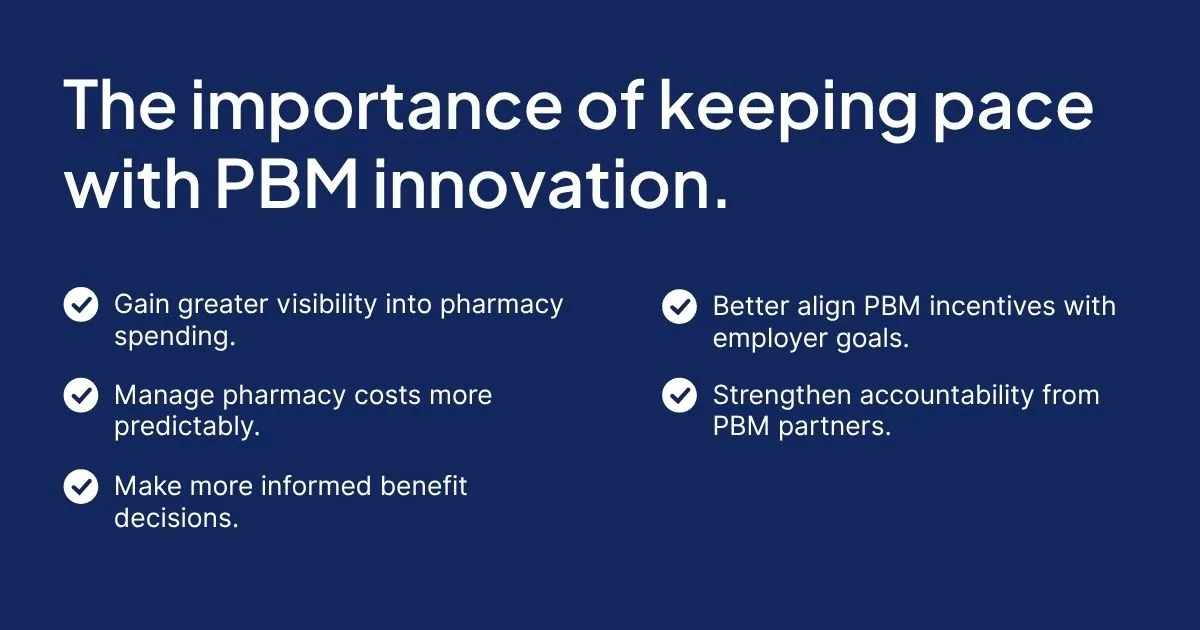
BOOK A DEMOThe importance of keeping pace with PBM innovation.
Keeping pace with PBM innovation doesn’t mean replacing systems every time a new tool enters the market. It means making sure your pharmacy benefit has the data, workflows, and clinical support needed to manage current cost and member challenges.
The technology should help your organization audit spending, predict costs, make informed benefit decisions, align vendor incentives, and verify results.
Gain greater visibility into pharmacy spending.
Modern reporting and automated claim review give employers a more complete record of what the plan paid, what the pharmacy received, how member costs were calculated, and where rebates were applied. This turns auditing from a limited year-end exercise into an ongoing management process.
Greater visibility makes it easier to achieve:
- Claim-level visibility
- Clear audit trails
- Faster identification of discrepancies
- Better verification of contract terms
Manage pharmacy costs more predictably.
Real-time analytics, utilization monitoring, and earlier intervention help employers identify cost changes before the renewal process. These capabilities support more accurate forecasting and help organizations lower healthcare costs without relying primarily on higher deductibles or employee cost shifting.
More timely data supports:
- Earlier detection of cost growth
- Better specialty drug forecasting
- More accurate pharmacy budgets
- Fewer unexpected high-cost claims
Make more informed benefit decisions.
Employers need information that shows what is driving spending, which interventions are working, and where plan design may be creating access problems. Integrated reporting makes those patterns easier to find and act on.
Benefits teams can use these insights for:
- Clearer formulary evaluation
- Better understanding of utilization
- Stronger vendor comparisons
- More informed renewal decisions
Explore how a connected clinical team enhances member care.
Better align PBM incentives with employer goals.
Technology works differently depending on the financial structure surrounding it. A sophisticated platform can’t fix a contract that rewards higher drug prices, retained rebates, or dispensing through owned pharmacies. True PBM alignment requires a compensation model that doesn’t grow when medication spending increases.
The right financial model encourages:
- Fewer conflicts in formulary decisions
- Greater focus on lowest net cost
- Neutral pharmacy recommendations
- Clinical decisions that support plan and member needs
Strengthen accountability from PBM partners.
Employers should be able to compare actual performance against financial, service, and clinical commitments throughout the contract. Yet one-third of employers reported that they still couldn’t access complete claims data in 2025, while four in 10 said a vendor had refused to provide it, according to The American Journal of Managed Care.
A transparent PBM provides the data, consistent definitions, and audit rights needed to validate every reported result.
Effective accountability requires:
- Measurable performance guarantees
- Consistent reporting definitions
- Independent audit access
- Clear financial recourse when guarantees are missed
Stay ahead of PBM technology trends with Rightway.
Rightway uses technology to make pharmacy spending easier to understand and resolve member problems faster. Our platform connects claims, eligibility, pricing, rebates, engagement, and clinical information in one place. Pharmacists use these insights to guide members toward the lowest-cost, clinically appropriate option and address barriers before they turn into abandoned prescriptions or higher-cost events.
With Rightway as your pharmacy benefits manager, employers receive:
- A real-time reporting portal for monitoring claims, pharmacy spend, rebates and member engagement
- Claim-level data that makes it easier to audit pricing, validate savings and track contract performance
- Integrated medical and pharmacy insights that give clinical teams a more complete view of member needs
- Automated identification of high-cost claims, adherence gaps and members who may need earlier support
- Digital member tools for checking medication costs, reviewing coverage and connecting directly with pharmacy experts
Book a demo today and explore how Rightway can help your organization stay ahead of the technology trends driving PBM efficiencies.
Frequently asked questions.
Employers should first prioritize technology that improves cost visibility and removes administrative friction. This includes:
- Claim-level reporting
- Automated claims auditing
- Electronic prior authorization
- Integrated medical and pharmacy data
- Member tools that connect employees with clinical support
The correct order will depend on the employer's current gaps. An organization without access to complete claims and rebate information should address reporting first. An employer experiencing high specialty costs may need stronger clinical management, authorization workflows, and proactive member engagement.
Employers should also evaluate the PBM's financial model. New technology will not produce the expected savings if the PBM continues to earn revenue from higher drug prices, retained rebates, spread pricing, or owned pharmacies.