How PBM technology solutions are shaping the future of pharmacy benefits.


PBM technology solutions integrate pharmacy data, benefit administration, clinical insights, and member support into a single system. A pharmacy benefit manager (PBM) that runs on modern technology can process a claim, flag a savings opportunity, and route a pharmacist to a member in a single connected platform.
For plan sponsors, that shift changes what a PBM can actually deliver day to day. Faster systems mean faster answers for members standing at the pharmacy counter. Connected data means that benefits teams see a problem while there is still time to fix it. The result is stronger cost management and a pharmacy experience that members actually use.
Key highlights:
- Legacy PBM systems rely on batch processing and siloed data, which delay decisions and hide costs from plan sponsors.
- Modern PBM technology combines cloud claims adjudication, predictive analytics, and pharmacist-led workflows to catch problems before they become expensive.
- Rightway pairs its technology platform with a fully transparent financial model, so plan sponsors get faster answers and an accurate view of where every dollar goes.
What are PBM technology solutions?
Pharmacy benefit manager (PBM) technology solutions are the systems a pharmacy benefit manager uses to process claims, manage formularies, analyze drug spend, and support members and pharmacists in real time. They include claims adjudication platforms, clinical decision tools, member-facing apps, and client reporting portals.
Together, these PBM systems replace manual, paper-based processes with connected digital workflows. A modern PBM technology stack does not just record what has already happened. It surfaces what plan sponsors and members need to know at the moment a decision is made, whether that is at the pharmacy counter, in a doctor's office, or during a benefits review.
Why legacy PBM systems are falling short.
Many traditional PBMs still run on fragmented systems built decades ago. Pharmacy, benefits, and clinical data live in separate databases that rarely talk to each other. Each of these limitations carries a real cost. Delayed data means a plan sponsor cannot catch a spending trend until it's too late, siloed systems mean a pharmacist can't see a member's full history during a call, and rigid infrastructure means a plan change that should take days instead takes a full quarter.
| PBM Capability | Traditional PBM approach | Modern PBM technology systems |
|---|---|---|
| System architecture | Core claims processing supported by separate or batch-based reporting and data workflows | Cloud-based platforms with faster processing and real-time or near-real-time data access |
| Data integration | Siloed pharmacy, claims, benefits, and member data | Integrated data across pharmacy, benefits, clinical, and member systems |
| Reporting | Standardized reports with limited customization | Customizable dashboards, reporting, and drill-down analytics |
| Pricing transparency | Limited visibility into drug costs, rebates, fees, and spread pricing | Greater visibility into drug-level costs, PBM rebates, fees, and net spend |
| Implementation | Rigid integrations and complex system changes | API-enabled integrations and configurable platforms support faster implementation |
| Analytics | Retrospective reporting focused on historical performance | Actionable analytics identify spending, utilization, and intervention opportunities |
| Member experience | Transaction-focused tools with limited personalized support | Digital tools provide personalized pharmacy guidance and benefit navigation |
Key PBM technology capabilities driving modern pharmacy benefits.
A modern PBM platform doesn't rely on a single technology to do the work. It combines several capabilities, each aimed at a specific outcome for members, pharmacists, or plan sponsors.
- AI-powered clinical decision support: Pharmacists and pharmacy technicians receive evidence and history summaries the moment a claim or a prior authorization request comes in, so they can make a clinical call quickly instead of digging through records first.
- Automated utilization management: Rules-based systems review claims against drug formulary and plan design in real time, replacing manual review steps with an automatic check at the point of the claim.
- Predictive risk and adherence modeling: Analytics scan claims and utilization patterns to flag members who show early signs of non-adherence, a therapy gap, or rising cost exposure, often before the member notices a problem themselves.
- Real-time pharmacy decision support: When a prescription hits a claims system, the platform can compare pharmacy options and drug alternatives instantly, so members see savings opportunities before they pay at the counter.
- Digital medication management: Members track prescriptions, refill dates, and medicine details in one place instead of relying on memory and old pharmacy receipts.
- Personalized member engagement: Instead of generic mailed notices as the only form of communication, members get alerts specific to their own medications, benefits, and costs through an app.
- Pharmacist-enabled technology workflows: Technology routes insights to a person, not a chatbot. A licensed pharmacist reviews the evidence and makes the call, with the system doing the legwork beforehand.
4 PBM innovations transforming cost and care outcomes.
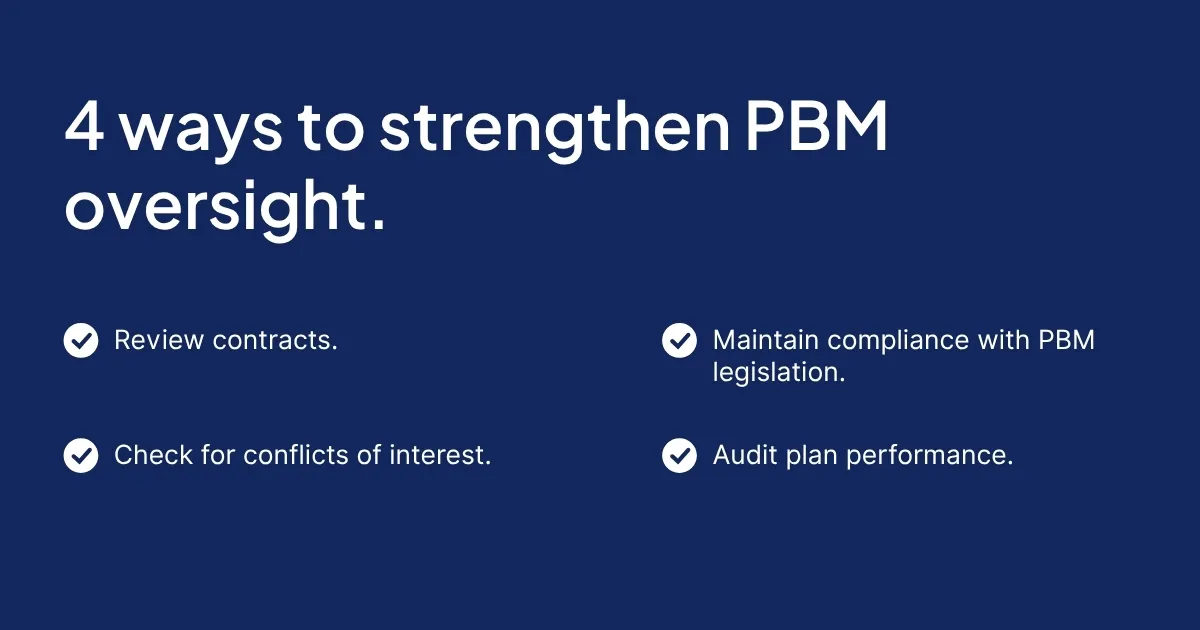
A faster claims engine or a smarter algorithm means nothing on its own. What matters is whether that technology affects outcomes: whether a claim gets approved at the counter instead of being rejected, whether a pharmacist catches a risk before it becomes a hospital visit, or whether a member picks a cheaper drug because someone told them it existed. These four innovations tie a piece of technology to one of those decisions.
1. Claims are processed in real time to reduce avoidable pharmacy spend.
Modern claims infrastructure evaluates benefit rules and pricing information in a fraction of a second, so a pharmacist gets an accurate point-of-sale decision at the moment of the scan. Faster adjudication means fewer rejected claims, fewer callbacks to the prescriber, and fewer members walking away without their medication.
2. Predictive machine learning models that identify high-risk members earlier.
Predictive models scan claims and utilization data to flag adherence issues, care gaps, or high-cost medication trends before they escalate into a hospital visit or an expensive specialty claim. McKinsey research on healthcare payers found that AI-enabled workflows can automate 50% to 75% of the manual review tasks involved in authorization decisions, which frees clinical staff to focus on the members who need direct intervention.
3. A pharmacist who reaches out before the member has to.
Technology routes the right insight to the right person. A pharmacist reviewing a flagged claim can see a member's full medication history, evaluate lower-cost clinically equivalent options, and reach out before the member even knows there is an issue. The technology does the surfacing. The pharmacist still makes the decision.
4. Real-time client portal analytics show trends, not just the spend.
Configurable dashboards let benefits leaders monitor spend, utilization, and emerging risk trends and use those insights during plan design conversations rather than waiting for an annual report. The National Alliance of Healthcare Purchaser Coalitions' 2026 Pulse of the Purchaser survey found that employers with full access to their pharmacy claims data were more likely to act on cost drivers than those without it, 61.3% versus 39.4%. Visibility only changes outcomes and costs when a plan sponsor can actually get to the data.
How PBM technology should support a better model
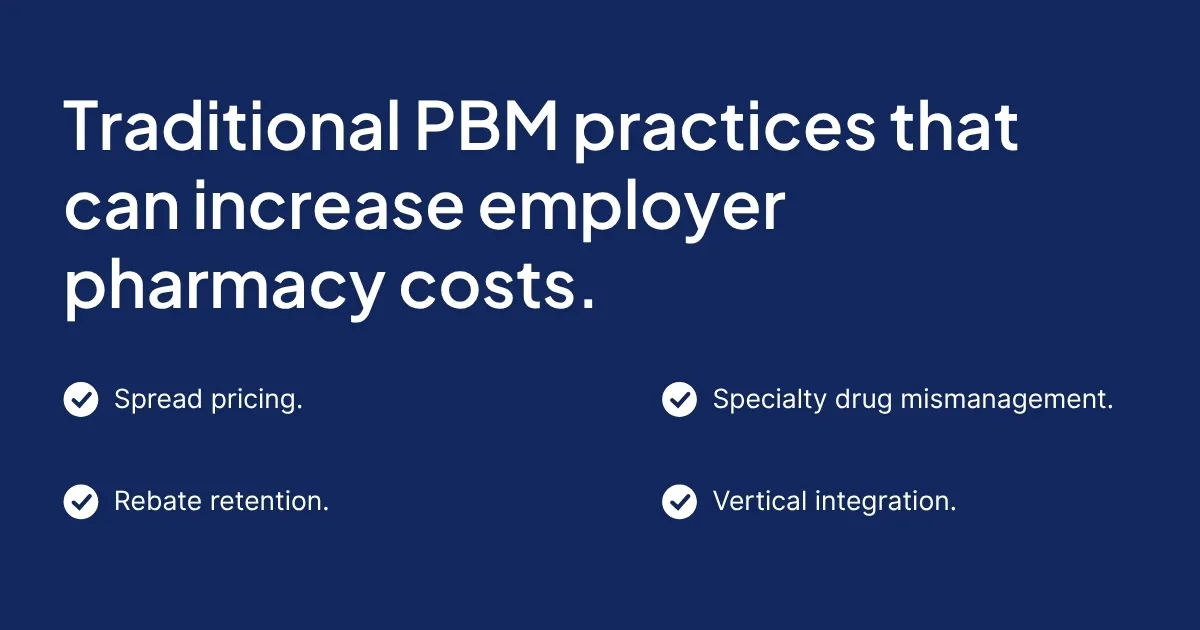
Technology alone doesn't make a PBM better. What matters is how that technology supports the PBM's business model, clinical decisions, and ability to manage pharmacy spend. Ask what the technology helps the PBM see, what actions it enables, who remains accountable for decisions, and whether the underlying business model is aligned with your plan.
1. Supply chain independence without competing incentives
Ask whether the PBM owns pharmacies or other supply chain assets that could create competing financial incentives. Technology can identify lower-cost options, but the business model determines which options the PBM is incentivized to recommend to members. An aligned and transparent PBM has no ownership stake that pulls decisions toward its own assets, allowing its technology and clinical teams to prioritize the lowest net-cost option for the plan and member.
2. Enforceable financial guarantees tied to actual pharmacy spend.
Projected savings and contractual accountability are not the same thing. A PBM's technology should give plan sponsors the data needed to understand actual pharmacy spend and verify whether financial guarantees were met. Ask whether guarantees are clearly defined, measurable, and auditable against actual plan spend. Rightway's SureSpend pricing model sets a contractual ceiling on annual drug spend and refunds the difference if actual spend exceeds it.
3. Human-led clinical decisions, supported by technology
Predictive analytics and AI can help pharmacists identify adherence gaps, access barriers, clinical evidence, and cost opportunities faster. But technology should support clinical judgment, not replace it. Ask how the PBM uses technology in prior authorization and other clinical workflows, and whether licensed clinicians remain responsible for the final decision.
4. Tech-enabled infrastructure for faster implementation and integration.
A PBM's technology needs to connect with the other systems involved in administering and managing healthcare benefits. Modern infrastructure can make those connections faster and reduce the amount of custom development required. Ask about APIs, prebuilt integrations, data transfer requirements, and how the PBM connects with health plans, benefits platforms, and other healthcare partners.
Explore more PBM industry trends.
Eliminate financial blind spots with Rightway's PBM technology.
Rightway combines modern PBM technology with a transparent business model, giving plan sponsors clearer visibility into pharmacy spend, rebates, fees, and performance. That technology sits within a PBM designed around aligned economics, not as a standalone platform layered on top of the benefit.
The Rightway PBM solution also connects technology with pharmacy navigation and human-led clinical support. Integrated data and analytics help surface cost and care opportunities, while pharmacists and pharmacy experts help members act on them. The result is greater visibility, stronger accountability, and more control over pharmacy spend.
See how Rightway combines modern PBM technology and transparent pricing to give plan sponsors greater control. Book a demo
Get greater visibility into pharmacy spend, PBM performance, and member care with Rightway.
Book a demoFrequently asked questions.
Modern PBM technology can improve accuracy and transparency by connecting claims processing, pharmacy data, reporting, and clinical workflows in one system. That gives plan sponsors faster access to information and makes it easier to identify trends, investigate individual claims, and understand what is driving pharmacy spend.
Technology alone, however, does not create transparency. A PBM also needs a financial model that clearly discloses drug costs, pharmaceutical rebates, fees, and other sources of revenue so plan sponsors can verify what they are paying and where savings are going.