Specialty pharmacy trends: Driving costs for employers in 2026.


Specialty pharmacy trends are reshaping employer healthcare budgets, as high-cost drugs for complex conditions take up a growing share of pharmacy spend. In 2026, a handful of specialty claims can decide whether that spend holds steady or spikes. Employers who plan ahead for these trends keep their costs predictable.
Key highlights:
- Specialty pharmacy trends are the year-over-year changes in how treatments for complex conditions get approved and covered.
- Specialty drug spending is driven by a mix of high per-claim costs, growing utilization, expanded indications and limited competition.
- Utilization management, biosimilar substitution and care navigation together determine whether total drug spending stays in check or spirals.
- Rightway controls specialty medication costs with a 100% pass-through model, an independent pharmacy network and a transparent spend guarantee.
What is specialty pharmacy?
Specialty pharmacy is a drug category and care model that includes high-cost medications used to treat complex or chronic conditions, such as breast cancer, multiple sclerosis, rheumatoid arthritis and rare diseases. Services may include:
- Coordinating medication delivery and temperature-controlled storage
- Navigating prior authorization and insurance approval
- Providing patient education and clinical monitoring
- Managing refills and helping patients stay on treatment
- Connecting patients with financial assistance programs
According to Health Affairs Scholar research, 57% of medications approved by the FDA between 2000 and 2024 were classified as specialty. For employers, these drugs can represent a large portion of their pharmacy spend, as they're expensive to develop and manufacture and have little to no generic or biosimilar competition.
See how Rightway’s specialty pharmacy simplifies medication access for members.
Specialty pharmacy vs traditional pharmacy: main differences.
Specialty pharmacy operates on an entirely different model than traditional pharmacy, built around complex drugs, specialized handling and a higher cost per claim. Here's how the two approaches compare:
| Area. | Specialty pharmacy. | Traditional pharmacy. |
|---|---|---|
| Drug availability. | Dispense a limited range of specialized medications for high-risk members | Cover a broad range of commonly prescribed medications |
| Distribution model. | Use mail delivery or designated pharmacy locations | Serve patients through local retail locations |
| Prescription volume. | Manage fewer prescriptions with higher costs per claim | Handle higher prescription volumes with lower average costs |
| Pharmacy access. | Coverage may be limited to an approved specialty network | Access extends to a broader pharmacy network |
| Plan impact. | Require closer oversight, as a small number of claims can drive significant spend | Cost is spread across a larger number of routine member prescriptions |
Top 5 specialty drug trends in 2026.
Specialty drug trends aren't moving in one direction. Here are six major forces reshaping the costs employers pay for their medication:
1. Biosimilar adoption.
Biosimilars are highly similar versions of brand-name biologic drugs, with no clinically meaningful differences in safety, purity or effectiveness. As more biosimilars enter the market, employers can unlock meaningful savings, but only if the plan is structured to encourage their use instead of defaulting to the higher-cost reference product.
2. Cell and gene therapies.
With the soaring cost of cell and gene treatments, even a single claim can create major budget exposure for a self-funded plan. For example, Casgevy, the first approved CRISPR-based cell therapy, launched with a wholesale acquisition cost of $2.2 million, according to The CRISPR Journal. Planning for that risk ahead of time is what separates employers that can manage the impact from those caught off guard.
3. GLP-1s and metabolic therapies.
Weight management and diabetes drugs remain among the fastest-growing drivers of overall employer pharmacy spend, even though they are not always classified as specialty drugs. As utilization grows, employers are considering tighter coverage criteria, direct-to-consumer purchasing options and alternative benefit designs.
4. Specialty pharmacy consolidation.
Specialty pharmacy remains highly consolidated, and that concentration gives a small number of players outsized influence over access, dispensing and patient support. For plan sponsors, the challenge is making sure that consolidation doesn’t limit competition or weaken the savings they’re trying to capture.
5. Expanded indications and coverage management.
More specialty drugs are being used across additional indications, which is forcing employers and payers to tighten coverage rules and rethink how they manage access. The challenge is not just paying for new therapies, but deciding when broader use is clinically justified and financially sustainable.
How can employers manage rising specialty drug costs?
The average cost of specialty drugs keeps climbing, but employers don't have to delay treatment for the members who depend on these therapies to keep it in check.
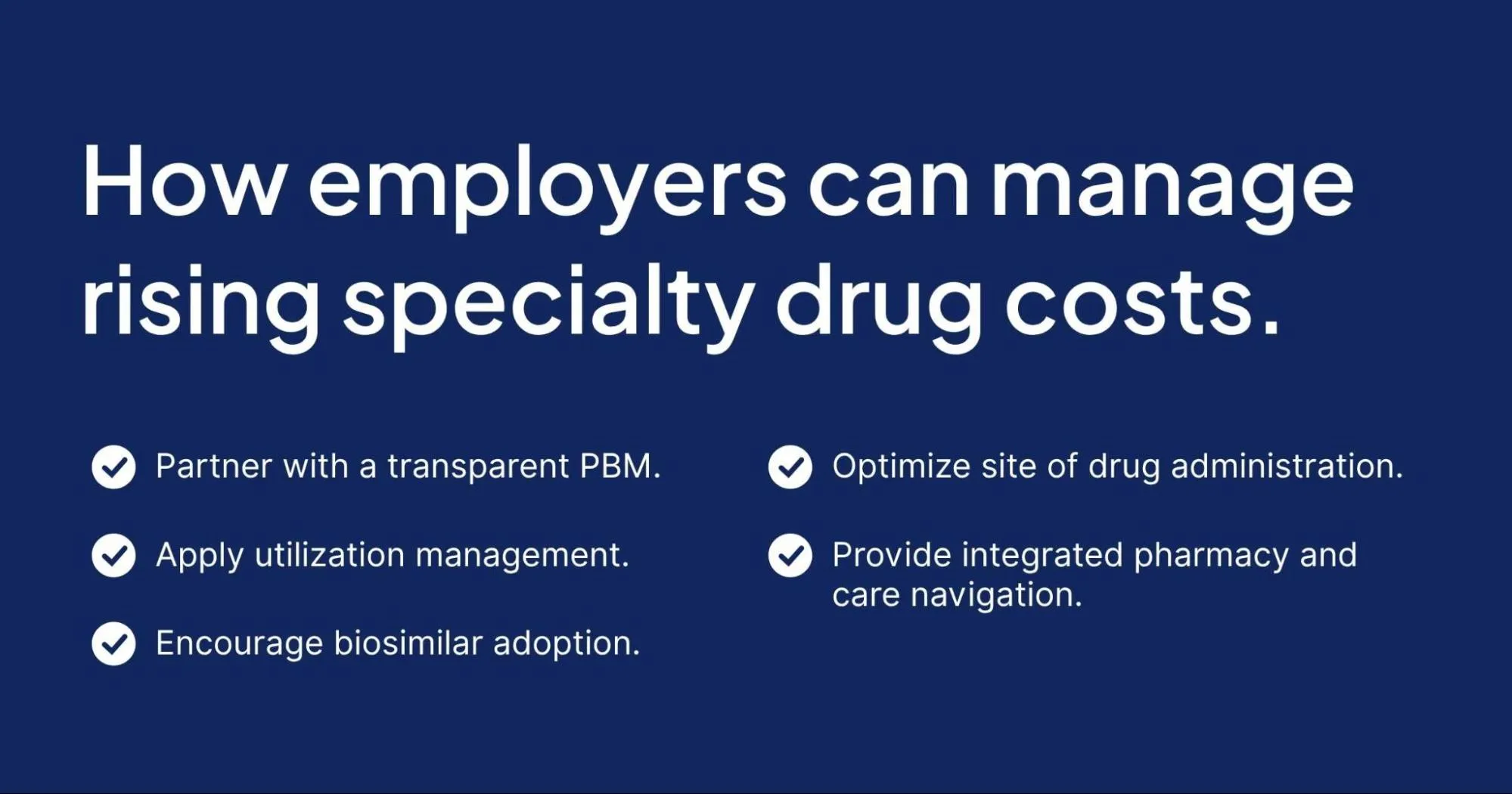
Here are five specialty pharmacy cost management strategies:
- Partner with a transparent pharmacy benefits manager (PBM): Choose a PBM that passes rebates through in full and charges a flat admin fee, rather than one that retains the spread on specialty claims.
- Apply utilization management: Use prior authorization to confirm a specialty drug is medically necessary before it's dispensed.
- Encourage biosimilar adoption: Steer members toward lower-cost, clinically equivalent alternatives when they exist.
- Optimize the site of drug administration: Move specialty drug infusions (IV treatments often given in a hospital) to lower-cost settings with home or outpatient services.
- Provide integrated pharmacy and care navigation: Give members access to clinical guidance so they land on the most cost-effective, clinically appropriate therapy from the beginning.
What role does a PBM play in controlling specialty pharmacy costs?
A transparent, pass-through pharmacy benefit manager (PBM) turns specialty management from reactive claims processing into active cost control. These types of medications already account for $485.4 billion annually, or 53% of total U.S. prescription drug spend, according to the American Journal of Health-System Pharmac y, and self-funded employers feel that shift directly.
Implementing a comprehensive, transparent PBM that provides a high-touch pharmacy navigation is an effective strategy for managing the utilization and pricing of specialty drugs.
Here’s the PBM role in controlling specialty medication costs:
1. Pharmacy benefit managers drive members to the lowest-priced medications.
Controlling runaway specialty drug prices in medical benefits is a big issue for employers looking to cut spending. PBMs that include cost-effective solutions in their drug formulary and offer generic and therapeutic alternatives for expensive medications help members and plan sponsors pay less for the same treatments.
As well, a PBM with integrated pharmacy navigation, such as Rightway, has clinical pharmacists on staff who proactively help members find the most appropriate next clinical step, not just the right drug, reducing costs without compromising outcomes.
2. Expert guidance places patients at the forefront of their care.
Managing specialty conditions can be difficult and time-consuming for members. PBMs with accessible pharmacy guidance build trusting relationships with members and proactively uncover additional health needs.
Pharmacists equip patients with the information needed to:
- Ask important medication questions
- Voice concerns
- Collaborate meaningfully with the pharmacy team
Beyond education, pharmacy guides improve outcomes by monitoring each step of a patient’s Rx journey, ensuring adherence to specialty medications and addressing any drug concerns or side effects that may arise.
Explore how aligned pharmacy benefits managers enhance specialty drug management.
Stay ahead of specialty pharmacy industry trends with Rightway.
Traditional PBM models profit from specialty drug costs through spread pricing, vertical integration and pharmaceutical rebates that never reach your plan. Rightway is built to close each of those gaps directly:
- A 100%pass-through PBM model with no hidden markups and one transparent admin fee, even on specialty claims.
- An independent specialty pharmacy network removes any incentive to steer members toward higher-margin drugs.
- SureSpend™ puts a contractual ceiling on total pharmacy spend, including specialty, so costs stay predictable year over year.
- Clinical pharmacists guide members to biosimilars and lower-cost alternatives from day one, driving an average 15% in year-one pharmacy savings.
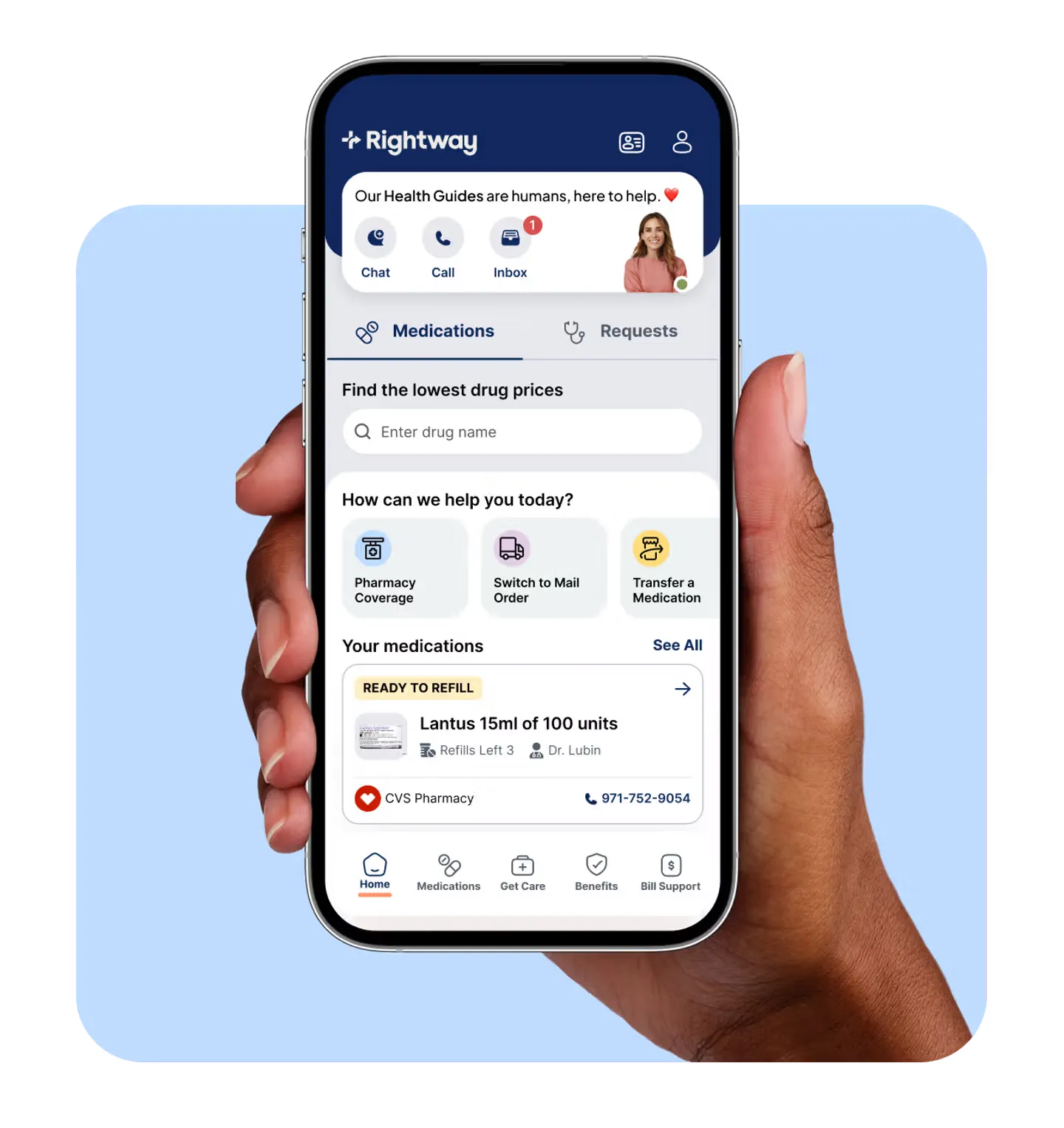
Book a demo today and see how Rightway can help you stay ahead of specialty pharmacy trends and lower your healthcare costs.